


Lightweight Concrete Additives | High-Performance Foaming Agents for Cellular Concrete

PRODUCT PARAMETERS
Description
Overview of steel fibers for concrete reinforcement
For high-impact resistance, we offer Steel Fibers, an ideal replacement for welded wire mesh in industrial floors and pre-cast elements. We also provide specialized Structural Synthetic Fibers that offer high tensile strength for demanding applications. These fibers are uniformly dispersed throughout the concrete mix, creating a multi-dimensional reinforcement network that traditional methods cannot achieve. This integrated approach simplifies construction, accelerates placement, and enhances the overall integrity and longevity of the concrete, providing a modern answer to age-old cracking and durability challenges.
Features of steel fibers for concrete reinforcement
1. Superior Crack Control and Enhanced Durability:
The primary feature of our fibers is their ability to bridge both micro-cracks that form during the plastic state and larger cracks in hardened concrete. This three-dimensional dispersion creates a more cohesive matrix that resists crack propagation. The direct benefit is a significant reduction in both plastic shrinkage cracking and long-term crack width. This leads to a much more durable concrete with lower permeability, which in turn enhances resistance to water ingress, freeze-thaw damage, and corrosion of any embedded steel. The result is a structure with a longer service life and reduced maintenance costs.
2. Increased Impact and Abrasion Resistance:
Fibers, particularly steel and robust synthetic macro fibers, dramatically improve the concrete’s toughness and post-crack performance. They absorb and distribute energy upon impact or loading. This feature provides the benefit of a more resilient surface that is less prone to spalling, chipping, and abrasion under heavy traffic or mechanical wear. This is a critical advantage for industrial floors, warehouse pavements, and infrastructure projects, leading to a harder-wearing surface that maintains its integrity over time.
3. Construction Efficiency and Cost Savings:
A key feature of using fiber reinforcement is the elimination of welded wire mesh (WWF) in many applications. This provides immense on-site benefits: it simplifies placement, as there is no mesh to be set up or potentially displaced, and it accelerates the entire construction process. By removing a labor-intensive step, projects see reduced labor costs and faster project timelines. The uniform distribution of fibers also ensures consistent reinforcement throughout the entire concrete section, unlike mesh, which can be improperly placed, leading to more reliable and predictable performance.

Specification of steel fibers for concrete reinforcement
Steel Fibers for Concrete Reinforcement– Product Specification
Product and Composition
Steel fibers used in concrete reinforcement are made from high-carbon steel or stainless-steel. The product fulfills international standards for tensile strength and ductility. Each fiber undergoes strict quality assurance to guarantee constant performance. Surface therapies like hooking, crimping, or milling may be applied to enhance bond toughness with the concrete matrix.
Measurements and Geometry
Fibers can be found in various lengths, typically in between 25 mm and 60 mm. The size varies from 0.3 mm to 1.0 mm, depending on the application. Typical shapes consist of straight, hooked-end, and swung profiles. The facet proportion (length-to-diameter) usually drops in between 30 and 100. This proportion straight impacts exactly how well the fibers disperse stress within the concrete.
Mechanical Residences
Tensile strength of the fibers is not much less than 1,000 MPa. Elongation at break is typically above 5%, guaranteeing the fibers can absorb energy before failure. These residential properties assist manage splitting and boost effect resistance in hardened concrete. The fibers also improve post-crack behavior, enabling structures to preserve load-bearing capability also after first fracturing.
Packaging and Handling
Steel fibers are crammed in moisture-resistant bags or mass containers to avoid corrosion and clumping. Conventional bag dimensions are 15 kg or 20 kg. They can be included straight to the concrete mixer throughout batching. Consistent diffusion is critical– overmixing ought to be avoided to stop fiber balling. Appropriate handling makes certain ideal performance in the last mix.
Compliance and Standards
All items satisfy ASTM A820/A820M and EN 14889 requirements. Examination records and mill certifications are readily available upon request. These records verify chemical structure, mechanical test outcomes, and dimensional precision. Using qualified fibers guarantees compatibility with structural design needs and lasting toughness.
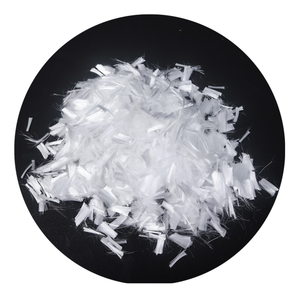
Applications of steel fibers for concrete reinforcement
Applications of Steel Fibers for Concrete Support
More Powerful Floorings and Pavements
Steel fibers make concrete floors and sidewalks much harder. They help quit fractures from growing. This is terrific for warehouses, manufacturing facilities, and parking area where heavy tons move everyday. With steel fibers, you commonly do not need conventional rebar or cable mesh. That saves time and cuts labor prices throughout building.
Better Passage Cellular Linings
Tunnels need walls that stand up under stress. Steel fiber-reinforced concrete considers that support without additional steel cages. It works well in both splashed and cast-in-place linings. The fibers spread out equally with the mix, so the whole framework remains solid and resists unexpected breaks.
Tough Industrial Structures
In places like nuclear power plant or chemical centers, concrete has to deal with impact, wear, and rough problems. Adding steel fibers increases toughness. Slabs last longer and require fewer repair work. Workers likewise complete jobs faster because there’s much less steel to area by hand.
Trustworthy Precast Elements
Precast concrete components– like beams, panels, or manholes– benefit from steel fibers also. The fibers enhance handling toughness before the pieces go to the work site. They likewise assist control shrinking cracks as the concrete dries. This suggests cleaner, much safer products with regular quality.
Safer Shotcrete Applications
When teams spray concrete onto slopes or underground spaces, steel fibers keep the product bound and stable. They minimize rebound (thrown away product) and raise sturdiness right after application. This is crucial for mining, slope stabilization, and repair where speed and safety issue most.
Steel fibers mix conveniently into standard concrete blends. They collaborate with typical batching and placing approaches. Contractors see actual advantages: fewer materials to take care of, quicker pours, and structures that stand much better in time.
Company Introduction
Welcome to Concrete and More, a leading provider of high-performance concrete admixtures, including our premium concrete water reducers. With years of experience in the global market, we offer advanced solutions designed to enhance the quality and efficiency of construction projects worldwide. Our state-of-the-art manufacturing facilities ensure top-quality products that meet international standards. We pride ourselves on exceptional customer service, technical support, and tailored solutions to meet specific project needs. Partner with us for reliable, innovative, and cost-effective concrete admixtures that drive your projects forward. Explore more at www.concreteandmore.de/. Let’s build the future together!
If you have any questions, please feel free to contact us.
Payment Methods
T/T, Western Union, Paypal, Credit Card etc.
Shipment Methods
By air, by sea, by express, as customers request.
5 FAQs of steel fibers for concrete reinforcement
Common Questions About Steel Fibers for Concrete Reinforcement
What are steel fibers used for in concrete?
Steel fibers are small, thin pieces of steel added to concrete mixes. They help control cracking and improve toughness. When mixed into concrete, they act like tiny reinforcements throughout the material. This makes the concrete better at handling impact, shock, and repeated stress.
Do steel fibers replace traditional rebar?
Not always. Steel fibers mainly reduce or eliminate the need for secondary (temperature or shrinkage) reinforcement. In some applications—like industrial floors or tunnel linings—they can fully replace light rebar. But for heavy structural loads, engineers still use main rebar. Always follow design guidelines and local codes.
How do steel fibers improve concrete performance?
They boost post-crack strength. Regular concrete breaks suddenly after cracking. With steel fibers, it holds together longer and carries more load even after cracks form. This leads to better durability, less spalling, and improved resistance to fatigue and abrasion.
Are all steel fibers the same?
No. Steel fibers vary in shape, length, diameter, and tensile strength. Some have hooked ends, others are straight or crimped. The right type depends on your project’s needs. Hooked-end fibers offer better anchorage in concrete. Always choose fibers tested and approved for your specific application.
How are steel fibers added to concrete?
You can add them at the batch plant or on-site during mixing. Make sure the mixer runs long enough—usually 4 to 5 minutes after adding fibers—to spread them evenly. Poor mixing causes clumping, which weakens the concrete. Follow the manufacturer’s instructions for dosage and mixing time.
REQUEST A QUOTE
RELATED PRODUCTS

Polypropylene Polymer Macro Synthetic Reinforcement Concrete Fiber for Concrete Flooring

High Strength Polypropylene fiber Is Used To Strengthen concrete
Concrete Construction Materials of Synthetic PVA Concrete Fiber for Cement Roofing Sheet
PP Concrete Fiber Monofilament for Concrete Reinforcement 12mm
Professional Supply Polyester Staple Fiber Competitive PET Concrete Fiber chunky polypropylene fiber
