Lightweight Concrete Additives | High-Performance Foaming Agents for Cellular Concrete

PRODUCT PARAMETERS
Description
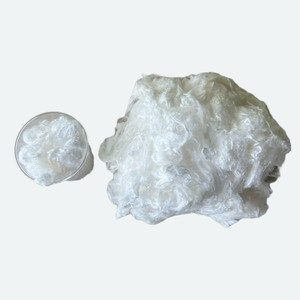
Overview of Industrial Grade Concrete Micro Synthetic PP Concrete Fiber Macro Fiber in Plastic for Concrete
For high-impact resistance, we offer Steel Fibers, an ideal replacement for welded wire mesh in industrial floors and pre-cast elements. We also provide specialized Structural Synthetic Fibers that offer high tensile strength for demanding applications. These fibers are uniformly dispersed throughout the concrete mix, creating a multi-dimensional reinforcement network that traditional methods cannot achieve. This integrated approach simplifies construction, accelerates placement, and enhances the overall integrity and longevity of the concrete, providing a modern answer to age-old cracking and durability challenges.
Features of Industrial Grade Concrete Micro Synthetic PP Concrete Fiber Macro Fiber in Plastic for Concrete
1. Superior Crack Control and Enhanced Durability:
The primary feature of our fibers is their ability to bridge both micro-cracks that form during the plastic state and larger cracks in hardened concrete. This three-dimensional dispersion creates a more cohesive matrix that resists crack propagation. The direct benefit is a significant reduction in both plastic shrinkage cracking and long-term crack width. This leads to a much more durable concrete with lower permeability, which in turn enhances resistance to water ingress, freeze-thaw damage, and corrosion of any embedded steel. The result is a structure with a longer service life and reduced maintenance costs.
2. Increased Impact and Abrasion Resistance:
Fibers, particularly steel and robust synthetic macro fibers, dramatically improve the concrete’s toughness and post-crack performance. They absorb and distribute energy upon impact or loading. This feature provides the benefit of a more resilient surface that is less prone to spalling, chipping, and abrasion under heavy traffic or mechanical wear. This is a critical advantage for industrial floors, warehouse pavements, and infrastructure projects, leading to a harder-wearing surface that maintains its integrity over time.
3. Construction Efficiency and Cost Savings:
A key feature of using fiber reinforcement is the elimination of welded wire mesh (WWF) in many applications. This provides immense on-site benefits: it simplifies placement, as there is no mesh to be set up or potentially displaced, and it accelerates the entire construction process. By removing a labor-intensive step, projects see reduced labor costs and faster project timelines. The uniform distribution of fibers also ensures consistent reinforcement throughout the entire concrete section, unlike mesh, which can be improperly placed, leading to more reliable and predictable performance.

Specification of Industrial Grade Concrete Micro Synthetic PP Concrete Fiber Macro Fiber in Plastic for Concrete
Industrial-Grade Concrete Fibers for Superior Efficiency
Micro and Macro Synthetic PP Fibers in One Option
Our industrial-grade concrete fibers incorporate both micro and macro artificial polypropylene (PP) fibers in a solitary plastic additive. This dual-fiber system works inside the concrete to boost stamina, control cracking, and boost sturdiness from the start.
The micro fibers are very fine. They blend equally into the concrete matrix. They help in reducing early-age plastic shrinkage cracks. These small fibers hold the wet concrete with each other before it hardens. This leads to less surface cracks and better general coating.
The macro fibers are much longer and more powerful. They act like tiny supports after the concrete collections. They link cracks that may develop under stress and anxiety. This increases strength, effect resistance, and post-crack performance. Frameworks remain much safer and last longer.
Both fiber types are made from 100% virgin polypropylene. They withstand alkali, moisture, and chemicals discovered in concrete. They do not rust or deteriorate over time. The fibers spread easily throughout mixing with no clumping. No special tools is required.
Key Advantages You Can Rely On
– Minimizes breaking at early and later phases
– Enhances flexural strength and power absorption
– Boosts surface stability and abrasion resistance
– Simplifies placement — no extra labor or steel mesh required
– Economical option to typical reinforcement in lots of applications
These fibers are suitable for commercial floors, pavements, precast elements, shotcrete, and household pieces. They satisfy international standards for synthetic fiber use in concrete. Each set is checked for consistency and efficiency.
Utilize this fiber mix to construct smarter, stronger, and much more durable concrete frameworks– without transforming your normal operations.

Applications of Industrial Grade Concrete Micro Synthetic PP Concrete Fiber Macro Fiber in Plastic for Concrete
Industrial-Grade Concrete Fibers for Stronger, Much More Durable Structures
What Are PP and Macro Synthetic Fibers?
PP (polypropylene) concrete fibers and macro synthetic fibers are plastic-based ingredients mixed into concrete throughout batching. These fibers come in fine (micro) or rugged (macro) types. Both kinds help manage cracking and improve strength without changing standard steel support.
Where Are They Made use of?
These fibers function well in numerous industrial applications. Floorings in storage facilities, factories, and distribution centers utilize them to resist wear from heavy traffic and effects. Pavements, driveways, and filling anchors take advantage of lowered surface area splitting. Shotcrete cellular linings in passages and mines make use of macro fibers for far better cohesion and safety. Precast concrete aspects– like pipelines, manholes, and wall panels– also gain boosted handling stamina and fracture resistance.
Why Select Artificial Fibers Over Other Alternatives?
Artificial fibers do not rust. Unlike steel, they stay intact in wet or destructive settings. They blend uniformly right into concrete, offering uniform protection throughout the slab. Micro fibers primarily lower early-age plastic shrinkage splits. Macro fibers add post-crack stamina, assisting concrete hold together even after it cracks. This indicates fewer repair work and longer service life.
Installation is easy. No unique devices or training are needed. Simply add the fibers to the mixer with other materials. The outcome is a more durable concrete that handles stress and anxiety better from the first day. Contractors conserve time because there’s no demand to put additional wire mesh or second rebar in most cases.
Performance You Can Depend On
Industrial-grade PP and macro artificial fibers fulfill rigorous ASTM and EN standards. They are evaluated for tensile stamina, dispersion, and toughness. Builders pick them due to the fact that they deliver constant results throughout large pours and extreme problems. Whether you’re pouring a factory floor or lining an underground structure, these fibers give reliable performance with very little hassle.
Company Profile
We are the global leader in lightweight concrete and advanced engineered foam solutions. Known globally for its commitment to research, innovation, and applied expertise, we have been providing engineered foam solutions since the early 2012’s.
We can supply high-quality concrete admixture and foam concrete related products all over the world.
The company has a professional technical department and quality supervision department, a well-equipped laboratory, and equipped with advanced testing equipment and after-sales customer service center.
If you are interested, please feel free and contact us.
Payment
T/T, Western Union, Paypal, Credit Card etc.
Shipment
By air, by sea, by express, as customers request.

5 FAQs of Industrial Grade Concrete Micro Synthetic PP Concrete Fiber Macro Fiber in Plastic for Concrete
Frequently Asked Questions About Industrial-Grade Concrete Fibers
What are industrial-grade concrete fibers?
These fibers are tiny strands made from polypropylene (PP). They mix into concrete to make it stronger. There are two main types: micro fibers and macro fibers. Micro fibers help control early cracking. Macro fibers add toughness and impact resistance after the concrete hardens.
Why use synthetic PP fibers instead of steel?
PP fibers do not rust. They spread evenly in the mix. They also reduce plastic shrinkage cracks during curing. Unlike steel, they are lighter and easier to handle. Workers do not need special tools to mix or place them.
How do these fibers improve concrete performance?
Micro fibers hold the wet concrete together as it sets. This cuts down on surface cracks. Macro fibers act like internal reinforcement. They help the hardened concrete resist cracking under stress. Both types boost durability without changing how you pour or finish the slab.
Are these fibers easy to mix into concrete?
Yes. You add them straight into the mixer with other materials. No extra steps are needed. The fibers disperse well if mixed for the right time. Most ready-mix plants already know how to handle them.
Where are these fibers commonly used?
They work well in floors, pavements, walls, and precast parts. You’ll find them in warehouses, parking lots, tunnels, and industrial slabs. Any place that needs crack control and long-term strength can benefit from using them.
REQUEST A QUOTE
RELATED PRODUCTS

E glass chopped strands glass fiber for cement/concrete/gypsum board

High Strength Carbon Concrete Fiber 450g Triaxial Carbon Fiber for Concrete Repair

Polypropylene Staple Concrete Fiber for Concrete Reinforced Reinforcement PP Fiber
New Design Refractory Applications High Temperature Refractory Ceramic Fiber Blanket

Staple Monofilament Polypropylene PP Fiber for Concrete Reinforcement