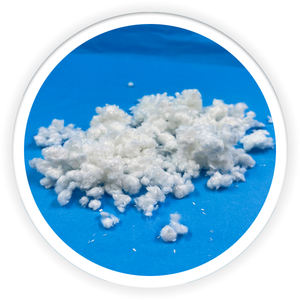
Lightweight Concrete Additives | High-Performance Foaming Agents for Cellular Concrete


PRODUCT PARAMETERS
Description
Overview of Polypropylene Fiber PP Fiber for Concrete Construction use
For high-impact resistance, we offer Steel Fibers, an ideal replacement for welded wire mesh in industrial floors and pre-cast elements. We also provide specialized Structural Synthetic Fibers that offer high tensile strength for demanding applications. These fibers are uniformly dispersed throughout the concrete mix, creating a multi-dimensional reinforcement network that traditional methods cannot achieve. This integrated approach simplifies construction, accelerates placement, and enhances the overall integrity and longevity of the concrete, providing a modern answer to age-old cracking and durability challenges.
Features of Polypropylene Fiber PP Fiber for Concrete Construction use
1. Superior Crack Control and Enhanced Durability:
The primary feature of our fibers is their ability to bridge both micro-cracks that form during the plastic state and larger cracks in hardened concrete. This three-dimensional dispersion creates a more cohesive matrix that resists crack propagation. The direct benefit is a significant reduction in both plastic shrinkage cracking and long-term crack width. This leads to a much more durable concrete with lower permeability, which in turn enhances resistance to water ingress, freeze-thaw damage, and corrosion of any embedded steel. The result is a structure with a longer service life and reduced maintenance costs.
2. Increased Impact and Abrasion Resistance:
Fibers, particularly steel and robust synthetic macro fibers, dramatically improve the concrete’s toughness and post-crack performance. They absorb and distribute energy upon impact or loading. This feature provides the benefit of a more resilient surface that is less prone to spalling, chipping, and abrasion under heavy traffic or mechanical wear. This is a critical advantage for industrial floors, warehouse pavements, and infrastructure projects, leading to a harder-wearing surface that maintains its integrity over time.
3. Construction Efficiency and Cost Savings:
A key feature of using fiber reinforcement is the elimination of welded wire mesh (WWF) in many applications. This provides immense on-site benefits: it simplifies placement, as there is no mesh to be set up or potentially displaced, and it accelerates the entire construction process. By removing a labor-intensive step, projects see reduced labor costs and faster project timelines. The uniform distribution of fibers also ensures consistent reinforcement throughout the entire concrete section, unlike mesh, which can be improperly placed, leading to more reliable and predictable performance.

Specification of Polypropylene Fiber PP Fiber for Concrete Construction use
Polypropylene Fiber for Concrete Building
Product Review
Polypropylene (PP) fiber is an artificial additive made use of to improve the performance of concrete and mortar. It is made from 100% virgin polypropylene resin. The fibers are great, evenly distributed, and created to mix quickly into damp concrete without clumping.
Trick Conveniences
Including PP fiber helps in reducing plastic contraction fractures that frequently show up throughout the very early drying out phase of concrete. It additionally boosts influence resistance and strength. This makes the final structure extra resilient under anxiety or abrupt lots. The fibers do not wear away, so they last as lengthy as the concrete itself. They work well in both interior and outdoor applications.
Technical Specs
– Material : 100% polypropylene
– Shade : Normally white or beige
– Size : Generally 6 mm, 12 mm, or 19 mm (personalized lengths offered).
– Size : Around 18– 32 microns.
– Tensile toughness : Minimum 450 MPa.
– Melting point : Roughly 165 ° C.
– Density : Concerning 0.91 g/cm SIX.
Exactly how to Utilize
Add the fibers directly right into the concrete mixer throughout batching. Mix for a minimum of 3– 5 minutes to ensure even diffusion. Standard dose ranges from 0.6 kg to 1.0 kg per cubic meter of concrete, relying on task demands. No modifications to water content or other mix designs are called for. The fibers mix efficiently and do not conflict with completing procedures like troweling or marking.
Usual Applications
PP fiber is commonly made use of in property slabs, commercial floors, sidewalks, precast aspects, shotcrete, and stucco. It is likewise appropriate for wall panels, foundations, and fixing mortars. Contractors pick it since it is simple to take care of, affordable, and boosts long-lasting efficiency without added labor.

Applications of Polypropylene Fiber PP Fiber for Concrete Construction use
Why Utilize Polypropylene Fiber in Concrete?
Polypropylene (PP) fiber is a typical additive in contemporary concrete mixes. It enhances the performance of concrete without altering how it is placed or ended up. Building contractors and engineers select PP fiber since it helps regulate splitting, improves resilience, and makes concrete much safer with time.
Split Control from the Start
When concrete hardens, it diminishes. This contraction frequently brings about little splits. PP fibers blend uniformly right into the concrete and act like a surprise assistance net. They hold the product with each other during early drying out stages. This lowers plastic shrinking splits– those that show up prior to the concrete totally sets.
Better Effect and Abrasion Resistance
Concrete with PP fiber takes care of bumps, scuffs, and hefty foot traffic far better than plain concrete. The fibers absorb energy and decrease fracture development. Floorings, driveways, and industrial pieces last longer when PP fiber is included.
Enhanced Security and Toughness
If concrete does crack under severe anxiety, PP fiber aids it stay in one item. Rather than breaking apart unexpectedly, the material holds together. This “post-crack” behavior makes frameworks more secure, particularly in locations where sudden failure can be unsafe.
Easy to Make Use Of, No Additional Tips
Including PP fiber is basic. Just throw the right amount into the mixer with other products. No unique tools or training are required. The fiber will not glob if mixed properly, and it does not impact exactly how concrete flows or sets.
Cost-efficient Long-Term Worth
While the ahead of time cost is somewhat higher, PP fiber reduces long-lasting repair and maintenance costs. Structures require less fixes and last much longer under day-to-day wear. For walkways, cellars, tunnels, and shotcrete applications, this little enhancement supplies solid returns.
PP fiber functions quietly inside the concrete– but its benefits show up daily.
Company Introduction
Welcome to Concrete and More, a leading provider of high-performance concrete admixtures, including our premium concrete water reducers. With years of experience in the global market, we offer advanced solutions designed to enhance the quality and efficiency of construction projects worldwide. Our state-of-the-art manufacturing facilities ensure top-quality products that meet international standards. We pride ourselves on exceptional customer service, technical support, and tailored solutions to meet specific project needs. Partner with us for reliable, innovative, and cost-effective concrete admixtures that drive your projects forward. Explore more at www.concreteandmore.de/. Let’s build the future together!
If you have any questions, please feel free to contact us.
Payment Methods
T/T, Western Union, Paypal, Credit Card etc.
Shipment Methods
By air, by sea, by express, as customers request.
5 FAQs of Polypropylene Fiber PP Fiber for Concrete Construction use
Frequently Asked Questions About Polypropylene Fiber for Concrete
What is polypropylene fiber used for in concrete?
Polypropylene (PP) fiber is added to concrete to control cracking. It helps reduce plastic shrinkage cracks that happen when concrete is still wet. The fibers spread evenly through the mix and hold the material together during early drying.
How does PP fiber improve concrete performance?
PP fiber boosts toughness and impact resistance. It does not replace steel reinforcement but works alongside it. The fibers help the concrete handle stress better and resist surface damage from impacts or abrasion.
Is polypropylene fiber easy to mix into concrete?
Yes. PP fiber blends well with standard concrete mixing methods. You can add it directly into the mixer with other materials. No special equipment or steps are needed. The fibers disperse quickly and stay evenly distributed.
Does PP fiber affect the workability of concrete?
A small amount of PP fiber has little effect on workability. If you use too much, the mix may become stiff. Follow the recommended dosage—usually between 0.6 to 1.0 kg per cubic meter—to keep the concrete easy to place and finish.
Can PP fiber replace steel mesh or rebar?
No. PP fiber is not a structural replacement for steel reinforcement. It mainly controls early-age cracking and improves durability. For load-bearing strength, you still need traditional steel bars or mesh. Use PP fiber as a secondary support, not a primary one.
REQUEST A QUOTE
RELATED PRODUCTS
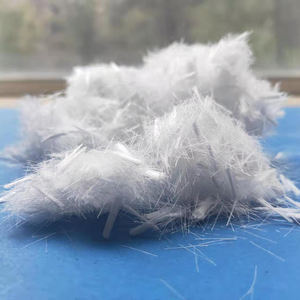
Polypropylene Fiber PP Fiber for Concrete Concrete Fiber

OEM length size good strength rate not recycled Polypropylene concrete fiber
New Special Design Hot ing 15d Concrete Mix Hollow Membrane Carbon Polypropylene Staple Fiber
Concrete Reinforcing Polypropylene Macro Synthetic Fiber PP Fiber
Factory Hot ing 7.5x35mm Hooked End Steel Concrete Fiber for Concrete