


Lightweight Concrete Additives | High-Performance Foaming Agents for Cellular Concrete


PRODUCT PARAMETERS
Description
Overview of Lightweight Corrosion Resistant FRP Rebar Fiberglass Polymer Polyester Rebar
For high-impact resistance, we offer Steel Fibers, an ideal replacement for welded wire mesh in industrial floors and pre-cast elements. We also provide specialized Structural Synthetic Fibers that offer high tensile strength for demanding applications. These fibers are uniformly dispersed throughout the concrete mix, creating a multi-dimensional reinforcement network that traditional methods cannot achieve. This integrated approach simplifies construction, accelerates placement, and enhances the overall integrity and longevity of the concrete, providing a modern answer to age-old cracking and durability challenges.
Features of Lightweight Corrosion Resistant FRP Rebar Fiberglass Polymer Polyester Rebar
1. Superior Crack Control and Enhanced Durability:
The primary feature of our fibers is their ability to bridge both micro-cracks that form during the plastic state and larger cracks in hardened concrete. This three-dimensional dispersion creates a more cohesive matrix that resists crack propagation. The direct benefit is a significant reduction in both plastic shrinkage cracking and long-term crack width. This leads to a much more durable concrete with lower permeability, which in turn enhances resistance to water ingress, freeze-thaw damage, and corrosion of any embedded steel. The result is a structure with a longer service life and reduced maintenance costs.
2. Increased Impact and Abrasion Resistance:
Fibers, particularly steel and robust synthetic macro fibers, dramatically improve the concrete’s toughness and post-crack performance. They absorb and distribute energy upon impact or loading. This feature provides the benefit of a more resilient surface that is less prone to spalling, chipping, and abrasion under heavy traffic or mechanical wear. This is a critical advantage for industrial floors, warehouse pavements, and infrastructure projects, leading to a harder-wearing surface that maintains its integrity over time.
3. Construction Efficiency and Cost Savings:
A key feature of using fiber reinforcement is the elimination of welded wire mesh (WWF) in many applications. This provides immense on-site benefits: it simplifies placement, as there is no mesh to be set up or potentially displaced, and it accelerates the entire construction process. By removing a labor-intensive step, projects see reduced labor costs and faster project timelines. The uniform distribution of fibers also ensures consistent reinforcement throughout the entire concrete section, unlike mesh, which can be improperly placed, leading to more reliable and predictable performance.

Specification of Lightweight Corrosion Resistant FRP Rebar Fiberglass Polymer Polyester Rebar
Light-weight Corrosion-Resistant FRP Rebar
Solid, Light, and Built to Last
Our FRP rebar is made from fiberglass-reinforced polymer with a polyester material base . It provides you the stamina you require without the weight of steel. One piece evaluates about 75% much less than typical steel rebar. That makes it less complicated to carry, cut, and set up on any kind of task site.
This rebar will not rust . Water, salt, chemicals– none of these will certainly damage it. That’s why it functions so well in extreme places like coastal areas, bridges, parking lot, or wastewater plants. You obtain long-term performance without continuous maintenance.
The product is likewise non-conductive . It does not carry electrical energy or disrupt radio signals. This makes it secure to utilize near power lines, healthcare facilities, labs, or sensitive electronic equipment.
Easy to Deal with
You can cut our FRP rebar with basic tools like a diamond blade saw. No special equipment is needed. Its smooth surface area means less grabs during placement. Benches come in typical dimensions and lengths, and personalized cuts are readily available on demand.
Due to the fact that it’s light-weight, your staff relocates faster and raises less. That helps in reducing tiredness and lowers the risk of injury. Move costs drop too– more bars fit in each truckload.
Constructed for Real-World Demands
Our FRP rebar fulfills or goes beyond industry standards for tensile strength and durability. It takes care of hefty tons while staying versatile sufficient to resist cracking under tension. The outer layer bonds well with concrete, giving you solid structural assistance.
Use it any place deterioration is a worry. Utilize it when weight matters. Use it when safety and long life are top concerns. This rebar delivers trustworthy results without the covert prices of steel– like rust repair services, coverings, or early substitute.
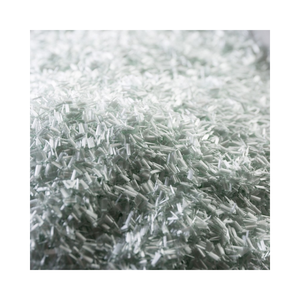
Applications of Lightweight Corrosion Resistant FRP Rebar Fiberglass Polymer Polyester Rebar
Applications of Lightweight Corrosion-Resistant FRP Rebar
Strong, Light, and Developed to Last
Fiberglass-reinforced polymer (FRP) rebar uses a clever option to conventional steel reinforcement. It evaluates only one-fourth as high as steel. This makes handling and installation quicker and easier. Employees can move it without heavy lifting gear. Projects complete quicker with much less labor.
Perfect for Harsh Settings
Deterioration is not a worry with FRP rebar. Unlike steel, it does not rust when revealed to saltwater, chemicals, or dampness. This makes it excellent for marine frameworks like piers, anchors, and seawalls. It likewise functions well in wastewater treatment plants, parking lot, and bridges where de-icing salts are made use of. Frameworks last longer without costly fixings.
Safe for Delicate Settings
FRP rebar is non-conductive and non-magnetic. This function issues in position like health centers with MRI equipments, research labs, and power stations. It will certainly not interfere with electronic signals or produce triggers. Safety enhances in eruptive or high-voltage locations.
Great for Concrete Building
Building contractors utilize FRP rebar in sidewalks, driveways, maintaining walls, and structure foundations. It bonds well with concrete and resists fracturing brought on by thermal growth. Since it does not corrode, the concrete remains intact over time. Upkeep expenses drop substantially.
Sustainable and Affordable
The long service life of FRP rebar reduces the need for substitutes. Fewer repairs mean less interruption and reduced life time expenses. Its light weight additionally reduces fuel use throughout transportation. Projects end up being extra eco-friendly without sacrificing stamina or toughness.
Company Profile
We are the global leader in lightweight concrete and advanced engineered foam solutions. Known globally for its commitment to research, innovation, and applied expertise, we have been providing engineered foam solutions since the early 2012’s.
We can supply high-quality concrete admixture and foam concrete related products all over the world.
The company has a professional technical department and quality supervision department, a well-equipped laboratory, and equipped with advanced testing equipment and after-sales customer service center.
If you are interested, please feel free and contact us.
Payment
T/T, Western Union, Paypal, Credit Card etc.
Shipment
By air, by sea, by express, as customers request.
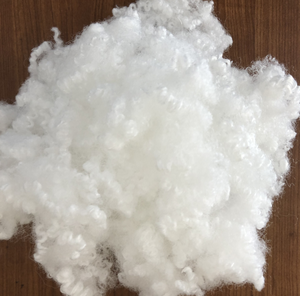
5 FAQs of Lightweight Corrosion Resistant FRP Rebar Fiberglass Polymer Polyester Rebar
Common Questions About Lightweight Corrosion-Resistant FRP Rebar
What is FRP rebar made of?
FRP rebar is made from fiberglass and polymer resin, usually polyester or vinyl ester. These materials are pulled through a process called pultrusion to form strong, solid rods. The result is a rebar that does not rust and weighs much less than steel.
Why choose FRP rebar over steel?
Steel rebar can corrode when exposed to water, salt, or chemicals. FRP rebar will not rust. It lasts longer in harsh environments like coastal areas, bridges, or parking garages. It also weighs about one-fourth as much as steel, making it easier to carry and install.
Is FRP rebar strong enough for construction?
Yes. FRP rebar has high tensile strength—often stronger than steel in pulling force. However, it behaves differently under bending loads. Engineers must design structures with FRP-specific guidelines. When used correctly, it supports concrete safely and effectively.
Can FRP rebar be cut or bent on site?
You can cut FRP rebar with standard tools like a diamond blade saw or abrasive wheel. But you cannot bend it like steel after it’s made. All bends must be ordered in the right shape from the factory. Plan ahead to avoid field modifications.
Does FRP rebar work with regular concrete?
Yes. FRP rebar bonds well with standard concrete mixes. Its surface is often sand-coated or ribbed to improve grip. Just follow proper placement and spacing rules. This ensures the concrete and rebar act together as one solid unit.
REQUEST A QUOTE
RELATED PRODUCTS

High Quality Concrete Reinforced Loose Steel Concrete Fiber
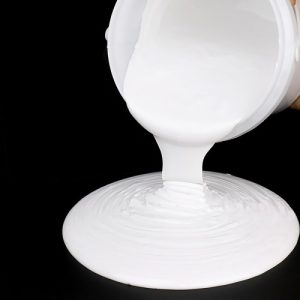
high quality soft Polypropylene PP Micro fiber Synthetic Polyester Staple Fiber for Concrete

Concrete 12mm Pp Fiber Monofilament Reinforced Polypropylene Monofilament Fiber For Concrete

High Tensile Reinforced Concrete Metal Construction Copper Micro Steel Fiber Coated Hooked End Steel Fiber Metal Steel Fiber

Polypropylene Fiber PP Fiber for Concrete Construction use
