


Lightweight Concrete Additives | High-Performance Foaming Agents for Cellular Concrete


PRODUCT PARAMETERS
Description
Overview of Glued hooked end steel fiber for concrete
For high-impact resistance, we offer Steel Fibers, an ideal replacement for welded wire mesh in industrial floors and pre-cast elements. We also provide specialized Structural Synthetic Fibers that offer high tensile strength for demanding applications. These fibers are uniformly dispersed throughout the concrete mix, creating a multi-dimensional reinforcement network that traditional methods cannot achieve. This integrated approach simplifies construction, accelerates placement, and enhances the overall integrity and longevity of the concrete, providing a modern answer to age-old cracking and durability challenges.
Features of Glued hooked end steel fiber for concrete
1. Superior Crack Control and Enhanced Durability:
The primary feature of our fibers is their ability to bridge both micro-cracks that form during the plastic state and larger cracks in hardened concrete. This three-dimensional dispersion creates a more cohesive matrix that resists crack propagation. The direct benefit is a significant reduction in both plastic shrinkage cracking and long-term crack width. This leads to a much more durable concrete with lower permeability, which in turn enhances resistance to water ingress, freeze-thaw damage, and corrosion of any embedded steel. The result is a structure with a longer service life and reduced maintenance costs.
2. Increased Impact and Abrasion Resistance:
Fibers, particularly steel and robust synthetic macro fibers, dramatically improve the concrete’s toughness and post-crack performance. They absorb and distribute energy upon impact or loading. This feature provides the benefit of a more resilient surface that is less prone to spalling, chipping, and abrasion under heavy traffic or mechanical wear. This is a critical advantage for industrial floors, warehouse pavements, and infrastructure projects, leading to a harder-wearing surface that maintains its integrity over time.
3. Construction Efficiency and Cost Savings:
A key feature of using fiber reinforcement is the elimination of welded wire mesh (WWF) in many applications. This provides immense on-site benefits: it simplifies placement, as there is no mesh to be set up or potentially displaced, and it accelerates the entire construction process. By removing a labor-intensive step, projects see reduced labor costs and faster project timelines. The uniform distribution of fibers also ensures consistent reinforcement throughout the entire concrete section, unlike mesh, which can be improperly placed, leading to more reliable and predictable performance.

Specification of Glued hooked end steel fiber for concrete
Glued Connected End Steel Fiber for Concrete
Product Summary
Glued hooked end steel fiber is a high-performance support material made from cold-drawn steel wire. Each fiber has hooks at both ends to enhance bonding with concrete. These fibers come in packages held together by a water-soluble glue. The glue dissolves swiftly when blended into concrete, allowing fibers to separate uniformly and spread throughout the mix.
Secret Requirements
– Material : High-carbon steel
– Tensile toughness : Minimum 1,000 MPa
– Length : Frequently 30 mm, 35 mm, or 60 mm
– Size : Usually 0.55 mm or 0.75 mm
– Element ratio (length/diameter) : Ranges from 55 to 80
– Hook kind : Double-end connected
– Bundle form : Glued clusters of 20– 30 fibers
– Glue type : Water-soluble, non-toxic
Benefits in Concrete Applications
The addicted ends secure securely into the concrete matrix. This boosts post-crack efficiency and assists control fracture size. Since the fibers are pre-glued, they stream conveniently right into the mixer without clumping. This ensures consistent distribution and saves time during batching. The outcome is concrete with much better durability, influence resistance, and resilience. It also decreases the need for standard rebar in particular applications like commercial floorings, passage linings, and shotcrete.
Dealing With and Blending Guidelines
Add fibers gradually into the concrete mixer during the blending cycle. Standard blending time suffices for full dispersion– typically 3 to 5 minutes after fiber addition. No unique tools is required. Constantly follow regional concrete standards and project specs for dose prices, which generally range from 20 to 50 kg per cubic meter. Store bundles in a completely dry area to stop moisture direct exposure prior to usage.
Applications of Glued hooked end steel fiber for concrete
Applications of Fixed Hooked-End Steel Fiber in Concrete
More Powerful Floorings That Last Longer
Glued hooked-end steel fibers are commonly used in industrial and business floor covering. These fibers help regulate breaking caused by shrinkage or hefty lots. They improve impact resistance and reduce surface wear. Consequently, floorings stay smooth and resilient also under consistent web traffic from forklifts, pallet jacks, or equipment.
Much Better Efficiency in Tunnel Linings
In tunnel building and construction, sprayed concrete (shotcrete) typically includes glued hooked-end steel fibers. The fibers lock into the concrete matrix many thanks to their special hook form. This provides the lining much better strength and assists it soak up power throughout ground movement. Specialists depend on this reinforcement to quicken work and avoid standard rebar in many cases.
Dependable Support for Precast Aspects
Precast concrete items like manholes, pipelines, and wall panels gain from these fibers as well. Including them throughout blending boosts flexural strength and lowers the opportunity of cracks throughout dealing with or transport. The adhesive coating maintains fibers uniformly dispersed, which prevents clumping and ensures constant quality across every set.
Improved Security in Mining and Below Ground Job
Mining procedures use fiber-reinforced shotcrete to maintain wall surfaces and ceilings in below ground openings. Glued hooked-end steel fibers supply fast, dependable assistance without the hold-ups of installing mesh or rebar. Their high bond toughness with concrete ways less risk of spalling or collapse, developing much safer working conditions.
Sturdy Solutions for Pavements and Roads
Concrete pavements treated with these fibers reveal enhanced exhaustion resistance and longer service life. They take care of duplicated vehicle lots far better and require less joints. This leads to reduce upkeep expenses and smoother surface areas with time. Municipal projects and airport terminal paths commonly pick this approach for its proven record.
Company Introduction
Welcome to Concrete and More, a leading provider of high-performance concrete admixtures, including our premium concrete water reducers. With years of experience in the global market, we offer advanced solutions designed to enhance the quality and efficiency of construction projects worldwide. Our state-of-the-art manufacturing facilities ensure top-quality products that meet international standards. We pride ourselves on exceptional customer service, technical support, and tailored solutions to meet specific project needs. Partner with us for reliable, innovative, and cost-effective concrete admixtures that drive your projects forward. Explore more at www.concreteandmore.de/. Let’s build the future together!
If you have any questions, please feel free to contact us.
Payment Methods
T/T, Western Union, Paypal, Credit Card etc.
Shipment Methods
By air, by sea, by express, as customers request.
5 FAQs of Glued hooked end steel fiber for concrete
Frequently Asked Questions About Glued Hooked-End Steel Fiber for Concrete
What is glued hooked-end steel fiber?
Glued hooked-end steel fiber is a type of reinforcement used in concrete. Each fiber has a hook at both ends and is held together in small bundles with water-soluble glue. The glue dissolves when mixed into concrete, letting the fibers spread evenly.
Why use hooked ends instead of straight fibers?
Hooked ends grip the concrete better than straight fibers. This improves tensile strength and helps control cracking. The hooks lock into the concrete matrix, making it harder for cracks to grow.
How does the glue affect concrete mixing?
The glue keeps fibers from clumping during handling and storage. Once added to the mixer, water breaks down the glue quickly. This lets fibers separate and mix uniformly without balling up.
Can this fiber replace traditional rebar?
It depends on the project. Glued hooked-end steel fiber works well for controlling shrinkage cracks and boosting impact resistance. But it usually complements rebar rather than replaces it in structural applications. Always follow engineering guidelines.
What concrete applications benefit most from this fiber?
This fiber is ideal for industrial floors, tunnel linings, shotcrete, pavements, and precast elements. It adds toughness, reduces crack width, and improves durability. Projects needing less maintenance and longer service life see clear advantages.
REQUEST A QUOTE
RELATED PRODUCTS
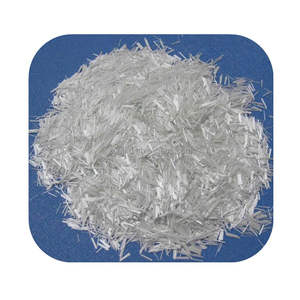
Concrete Reinforcing Alkaline Resistant 75g Fiberglass Mesh
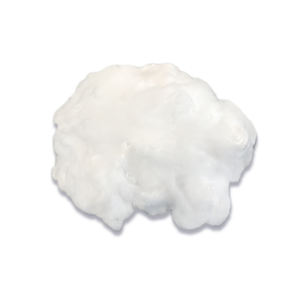
Concrete PP Macro Concrete Fiber for Reinforcement
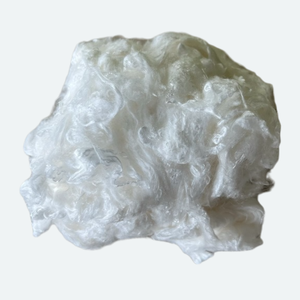
Industrial Grade Polypropylene Micro Macro Concrete Fiber Factory for Cement Concrete
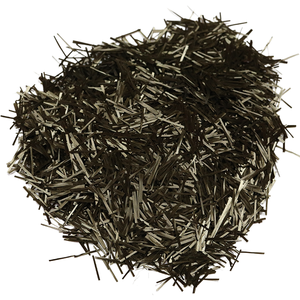
Supply Polypropylene Reticular Concrete Fiber for Fiber Reinforced Concrete Engineering
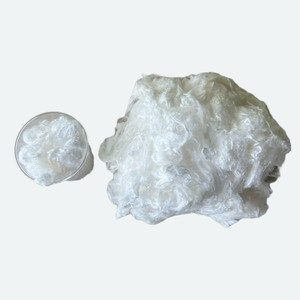
Custom basalt fiber chopped strand for cement concrete pavement
