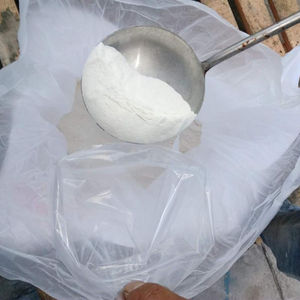
Additifs légers pour béton | Agents moussants haute performance pour béton cellulaire


PARAMÈTRES DU PRODUIT
Description
Overview of Concrete Admixture Polypropylene Micro Fiber for Reduction of Concrete Permeability and Water Absorption
Concrete Admixture Polypropylene Micro Fiber for Reduction of Concrete Permeability and Water Absorption is chemical compounds added to concrete mixtures to improve various properties of the material, comme la maniabilité, force, durabilité, et temps de durcissement. Ces additifs comprennent des plastifiants, ralentisseurs, accélérateurs, agents imperméabilisants, et agents entraîneurs d'air, chacun conçu pour répondre à des besoins spécifiques dans la production de béton. Les additifs pour béton sont couramment utilisés dans la construction commerciale et résidentielle., ainsi que dans la production de béton préfabriqué et prêt à l'emploi. En améliorant la performance et la qualité du béton, ces additifs contribuent à améliorer l'efficacité globale des projets de construction tout en assurant la durabilité et la longévité de la structure finie. Ils sont faciles à incorporer au mélange et fournissent des solutions rentables pour optimiser les propriétés du béton dans une large gamme d'applications..
Characteristics of Concrete Admixture Polypropylene Micro Fiber for Reduction of Concrete Permeability and Water Absorption
Force améliorée: Les additifs pour béton peuvent augmenter considérablement la résistance à la compression du béton, le rendant plus résistant à la pression et au stress. Cela garantit la longévité et la durabilité des structures, réduisant le risque de fissuration ou de défaillance.
Maniabilité améliorée: Les additifs tels que les plastifiants et les superplastifiants améliorent la fluidité et la consistance du béton, ce qui facilite la manipulation, verser, et terminer. Cela améliore la productivité sur le chantier de construction et réduit les coûts de main-d'œuvre.
Durcissement plus rapide: Accélérateurs, un type d'additif pour béton, aider à accélérer le processus de durcissement, permettant des temps de prise plus rapides et une réalisation plus rapide des projets. Ceci est particulièrement utile par temps froid ou lorsque les délais de construction sont accélérés..
Durabilité accrue: De nombreux additifs, comme les agents réducteurs d’eau et les composés imperméabilisants, augmenter la résistance du béton aux conditions environnementales difficiles telles que les cycles de gel-dégel, entrée d'eau, et exposition chimique, garantir des performances à long terme.
Meilleure adhérence et liaison: Certains additifs améliorent l'adhérence entre le béton et d'autres matériaux, comme l'acier d'armature ou les granulats, améliorant l'intégrité structurelle globale et réduisant les risques de délaminage ou de séparation.
Polyvalence pour diverses applications: Les additifs pour béton sont très polyvalents et peuvent être utilisés dans un large éventail d'applications, des bâtiments résidentiels aux projets d’infrastructures à grande échelle. Ils sont formulés pour répondre à des besoins spécifiques tels que les bétons à haute résistance, béton autoplaçant, ou béton durable pour conditions extrêmes.
Rentable: En améliorant la qualité et la performance du béton, les additifs réduisent le besoin d’entretien et de réparations supplémentaires, conduisant à des économies de coûts significatives à long terme. En plus, ils aident à optimiser la conception du mélange, réduire le gaspillage de matériaux.
Respectueux de l'environnement: De nombreux additifs modernes pour béton sont formulés avec des ingrédients respectueux de l'environnement., contribuer à des pratiques de construction plus durables. Ces additifs contribuent à minimiser l'empreinte carbone et à améliorer la performance environnementale du béton..
Finition de surface améliorée: Les additifs tels que les agents entraîneurs d'air peuvent améliorer la finition et l'apparence du béton en empêchant les défauts comme les fissures., nid d'abeilles, ou dépoussiérage de surface, assurer un déroulement fluide, surface de qualité professionnelle.

Specification of Concrete Admixture Polypropylene Micro Fiber for Reduction of Concrete Permeability and Water Absorption
Exigences relatives aux adjuvants pour béton: Polypropylene Micro Fiber
Purpose and Advantages
Polypropylene mini fiber is a synthetic admixture contributed to concrete mixes to lower leaks in the structure and limitation water absorption. Lorsqu'il est mélangé directement dans du béton frais, these penalty fibers spread evenly and create a dense inner network. This network obstructs the courses that water and unsafe substances generally travel with. Par conséquent, the last concrete becomes much more immune to wetness, chloride access, et frappe chimique.
Propriétés physiques
Les fibres sont fabriquées à partir de 100% polypropylène vierge. They appear as white or off-white filaments with a normal size of 6– 12 mm and a diameter under 50 microns. The certain gravity ranges from 0.90 à 0.91. These fibers do not take in water and stay chemically inert in alkaline environments like concrete paste.
Blending Guidelines
Add the fibers throughout the initial mixing stage along with accumulations and water. A dosage of 0.6– 0.9 kg per cubic meter of concrete is typical for permeability control. Guarantee adequate mixing time– en général 3 à 5 minutes after fiber addition– to accomplish full diffusion. Aucun outil unique n'est nécessaire. Standard concrete mixers function well.
Efficiency Improvements
Concrete with polypropylene micro fibers reveals considerably lower capillary water absorption. Tests verify approximately 30– 50% reduction contrasted to simple concrete. The fibers also help minimize early-age plastic shrinking fractures, which better reduces the danger of water penetration over time. This makes the product ideal for basements, water storage tanks, tunnels, and aquatic frameworks.
Conformity and Safety and security
The item satisfies ASTM C1116/C1116M requirements for fiber-reinforced concrete. It consists of no harmful elements and postures no wellness risk during handling. Conserver dans un endroit sec à l'abri de la lumière directe du soleil. Keep product packaging secured when not being used to stop clumping.

Applications of Concrete Admixture Polypropylene Micro Fiber for Reduction of Concrete Permeability and Water Absorption
Applications of Polypropylene Micro Fiber in Concrete
Lower Leaks In The Structure, Better Defense
Including polypropylene micro fiber to concrete combinations helps reduce water absorption and block damaging substances from going into the framework. Eau, chlorures, and various other aggressive representatives can damage concrete over time. These tiny artificial fibers create a denser inner network inside the hardened concrete. This tighter framework slows down exactly how quick fluids and gases relocate with it.
More powerful resistance starts from within. When blended appropriately, polypropylene mini fibers spread evenly throughout the concrete. They do not react chemically with cement. Plutôt, they imitate a physical barrier at the tiny level. This restricts the development and development of little splits that often develop during very early drying or treating. Less cracks imply fewer courses for water to travel.
Où ça marche Idéal
This admixture is widely made use of in tasks where reduced leaks in the structure issues most. Think of basements, réservoirs d'eau, passages, cadres de stationnement des véhicules, and aquatic environments. Dans ces lieux, keeping dampness out is important for long-term resilience. Specialists likewise use it in precast components and flatwork subjected to constant wetting and drying out cycles.
Facile à utiliser, big influence. The fibers blend efficiently right into conventional concrete mixes without needing special tools. They function well with various other typical admixtures like plasticizers or air-entraining representatives. No significant adjustments to batching or positioning techniques are called for. Just follow the suggested dose– habituellement entre 0.6 à 1.0 kg par mètre cube– and you get quantifiable enhancement in efficiency.
By cutting down on how much water the concrete take in, polypropylene mini fiber helps prevent corrosion of steel support, coup de sulfate, et les dégâts dus au gel et au dégel. Le résultat est plus difficile, longer-lasting structure that requires much less upkeep over its life span.
Profil de l'entreprise
Nous sommes le leader mondial des solutions avancées de béton léger et de mousse technique.. Connu mondialement pour son engagement en faveur de la recherche, innovation, et expertise appliquée, nous fournissons des solutions de mousse technique depuis le début des années 2012.
Nous pouvons fournir des adjuvants pour béton et des produits liés au béton mousse de haute qualité dans le monde entier..
L'entreprise dispose d'un département technique professionnel et d'un département de supervision de la qualité, un laboratoire bien équipé, et équipé d'un équipement de test avancé et d'un centre de service client après-vente.
Si vous êtes intéressé, n'hésitez pas et contactez-nous.
Paiement
T/T, Western union, Paypal, Carte de crédit, etc..
Expédition
Par avion, par la mer, par express, comme le demandent les clients.

5 FAQs of Concrete Admixture Polypropylene Micro Fiber for Reduction of Concrete Permeability and Water Absorption
Foire aux questions: Polypropylene Micro Fiber for Concrete
What does polypropylene micro fiber do in concrete?
Polypropylene micro fiber reduces cracks in fresh and hardened concrete. It helps lower water absorption and makes concrete less permeable. This keeps moisture and harmful substances from entering the structure.
How does it reduce water absorption?
The fibers mix evenly into the concrete. They block tiny channels that form during drying. These channels usually let water pass through. With fibers in place, water finds it harder to move inside the concrete.
Is it easy to add to concrete mixes?
Oui. You can add polypropylene micro fiber during normal batching. Aucun équipement spécial n'est nécessaire. Suivez simplement la posologie recommandée. Les fibres se dispersent bien et ne s'agglutinent pas si elles sont bien mélangées.
Cela affecte-t-il la résistance du béton?
It does not replace steel reinforcement. But it improves durability by controlling early-age cracking. La résistance à la compression reste à peu près la même. Flexural toughness may improve slightly due to better crack control.
Où cette fibre est-elle couramment utilisée?
Les constructeurs l'utilisent dans les dalles, trottoirs, murs, et sous-sols. It works well in places where low permeability matters—like parking decks, réservoirs d'eau, et fondations. Any project needing less water entry can benefit from this fiber.
DEMANDER UN DEVIS
PRODUITS CONNEXES

Adjuvant pour béton PCE liquide pour une réduction élevée de l'eau dans le béton avec un faible agglomérant

Export Quality Industrial Grade Concrete Admixture Silica Fume for Micro Silica from Indian Exporter

Additif en poudre polymère redispersable pour mélange de béton imperméable RDP pour l'isolation externe et le revêtement du système de finition

HPMC pour mastic et mortier de construction Adjuvant pour béton moulu ISO Coulis HPMC

Fibre de monofilament de polypropylène d'adjuvant pour béton pour la prévention des fissures en bas âge