


Nga Whakapiri Raima Maamaa | Nga Kaipupuhi Hukarere Mahinga Nui mo te Raima Pukoro

What is cast-in-place foam concrete?
Cast-in-place foamed concrete refers to a lightweight foam made by physically preparing an aqueous foaming agent solution, katahi ka tapirihia te pahuka ki roto i te parapara i mahia ki te sima, whakatōpū, whakaurunga, whakaurunga, me te wai.
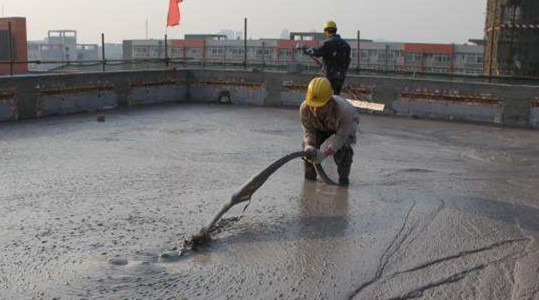
The application of cast-in-place foam concrete can be divided into two categories:
1. Cast-in-place foam concrete is mainly made of products. Hei tauira: poraka raima pahuka i, foam concrete lightweight partition wall, foam concrete cultural stone, foam concrete garden application, etc.
2. The cast-in-place foam concrete is mainly cast on-site.
Hei tauira: backfilling (landfilling of garbage dumps, road and bridge applications, load-reducing filling of tunnel entrances, subway load-reducing filling, etc.), foam concrete cast-in-place walls, etc. Because foamed concrete has the characteristics of environmental protection, simple construction and operation, stable quality, and can be poured on-site. The foamed concrete poured on site is called cast-in-place foamed concrete or cast-in-place foamed cement.
1) Weahanga wera: The thermal conductivity is 0.06-0.28W/(M.K), me te ātete waiariki e pā ana ki 10-20 he wa ki te raima noa.
2) Maamaa: The dry bulk density is 300-1600KG/M3, which is equivalent to about 1/5 ki 1/8 of ordinary cement concrete, ka taea te whakaiti i te taumahatanga katoa o te whare.
3) Integrity: On-site pouring construction is closely integrated with the main project, without boundary gaps and ventilation pipes.
4) Low elasticity and shock absorption: The porosity of cast-in-place foamed concrete makes it have a low elastic modulus, so that it has a good absorption and dispersion effect on impact loads.
5) Waihanga oro: The cast-in-place foam concrete contains a large number of independent bubbles, and they are evenly distributed. The sound absorption capacity is 0.09-0.19%, ko tenei 5 he wa ki te raima noa. It has an effective sound insulation function.
6) Compressive resistance: The compressive strength is 0.6-25.0MPA.
7) Te ātete wai: The cast-in-place foam concrete has low water absorption, relatively independent closed bubbles and good integrity, which make it have a certain waterproof performance.
8) Te mauroa: the same as the life of the main project.
9) Hanganga ngawari: only need to use cement foaming machine to realize automatic operation, can realize long-distance transportation with a vertical height of 200 mita, and the workload is 150-300M3/working day.
10) Te tiaki taiao: The raw materials required for foamed concrete are cement and foaming agent. The foaming agent is neutral and does not contain harmful substances such as benzene and formaldehyde, which avoids environmental pollution and fire-fighting hazards.
11) Ohanga: Low overall cost.
Ko Cie-China.org te kaiwhakarato taapiri raima pahuka e whakarato ana i te kaihoko hukapapa raima, superplasticizer,whakakaha kaha raima pahuka mo te raima mama, Nga poraka CLC. Mena kei te rapu koekaihoko pahuka, tēnā koa koawhakapā mai.