


Lub teeb yuag qhob ntxiv | Kev Ua Haujlwm Siab Ua Foaming Cov Neeg Sawv Cev Rau Cov Khoom Siv Ntawm Tes

What is cast-in-place foam concrete?
Cast-in-place foamed concrete refers to a lightweight foam made by physically preparing an aqueous foaming agent solution, and then adding the foam to a slurry made of cement, aggregates, admixtures, admixtures, thiab dej.
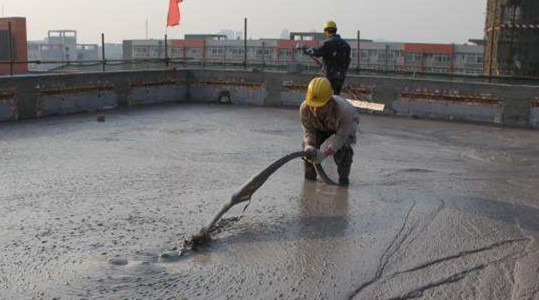
The application of cast-in-place foam concrete can be divided into two categories:
1. Cast-in-place foam concrete is mainly made of products. Piv txwv li: foam concrete block, foam concrete lightweight partition wall, foam concrete cultural stone, foam concrete garden application, thiab lwm yam.
2. The cast-in-place foam concrete is mainly cast on-site.
Piv txwv li: backfilling (landfilling of garbage dumps, road and bridge applications, load-reducing filling of tunnel entrances, subway load-reducing filling, etc.), foam concrete cast-in-place walls, thiab lwm yam. Because foamed concrete has the characteristics of environmental protection, simple construction and operation, zoo ruaj khov, and can be poured on-site. The foamed concrete poured on site is called cast-in-place foamed concrete or cast-in-place foamed cement.
1) Thermal rwb thaiv tsev: The thermal conductivity is 0.06-0.28W/(M.K), thiab kev tiv thaiv kub yog kwv yees li 10-20 times that of ordinary concrete.
2) Lub teeb yuag: The dry bulk density is 300-1600KG/M3, which is equivalent to about 1/5 rau 1/8 of ordinary cement concrete, uas tuaj yeem txo qhov hnyav tag nrho ntawm lub tsev.
3) Kev ruaj khov: On-site pouring construction is closely integrated with the main project, without boundary gaps and ventilation pipes.
4) Low elasticity and shock absorption: The porosity of cast-in-place foamed concrete makes it have a low elastic modulus, so that it has a good absorption and dispersion effect on impact loads.
5) Kev thaiv suab: The cast-in-place foam concrete contains a large number of independent bubbles, thiab lawv faib sib npaug. Lub peev xwm nqus suab yog 0.09-0.19%, o 5 times that of ordinary concrete. Nws muaj kev tiv thaiv suab zoo.
6) Kev tiv thaiv compression: Lub zog compressive yog 0.6-25.0MPA.
7) Water resistance: Cov pob zeb npuas hauv qhov chaw muaj kev nqus dej tsawg, cov nplaim kaw ywj pheej thiab muaj kev ruaj ntseg zoo, uas ua rau nws muaj kev tiv thaiv dej tshwj xeeb.
8) k: zoo ib yam li lub neej ntawm lub haujlwm tseem ceeb.
9) Tsim yooj yim: tsuas yog siv tshuab ua kua nplaum los ua haujlwm tsis siv neeg, tuaj yeem ua tau kev thauj mus deb nrog qhov siab ntsug 200 meters, Thiab cov haujlwm ua haujlwm yog 150-300 m³ ib hnub ua haujlwm.
10) Kev tiv thaiv ib puag ncig: Cov khoom raw uas xav tau rau pob zeb nplaum yog cement thiab tshuaj ua kua nplaum. Tus tshuaj ua kua nplaum yog tsis muaj tshuaj phem xws li benzene thiab formaldehyde, uas tiv thaiv kev puas tsuaj ib puag ncig thiab kev tua hluav taws.
11) Kev txuag nyiaj: Nqi qis tag nrho.
Cie-China.org yog tus thawj coj ua npuas ncauj qhob ntxiv muab cov pob zeb ua npuas ncauj ua npuas ncauj, superplasticizer,Ua npuas ncauj qhob lub zog enhancer rau lub teeb yuag pob zeb, CLC blocks. Yog tias koj tab tom nrhiavua npuas ncauj tus neeg sawv cev, thov koj xav tias dawb rautiv tauj peb.