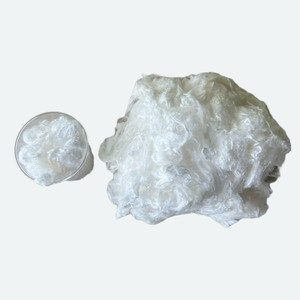
Lightweight Concrete Additives | High-Performance Foaming Agents for Cellular Concrete


PRODUCT PARAMETERS
Description
Overview of High Strength Composite GFRP Rebar Fiberglass Rebar Glass Fiber Reinforced Rebar
For high-impact resistance, we offer Steel Fibers, an ideal replacement for welded wire mesh in industrial floors and pre-cast elements. We also provide specialized Structural Synthetic Fibers that offer high tensile strength for demanding applications. These fibers are uniformly dispersed throughout the concrete mix, creating a multi-dimensional reinforcement network that traditional methods cannot achieve. This integrated approach simplifies construction, accelerates placement, and enhances the overall integrity and longevity of the concrete, providing a modern answer to age-old cracking and durability challenges.
Features of High Strength Composite GFRP Rebar Fiberglass Rebar Glass Fiber Reinforced Rebar
1. Superior Crack Control and Enhanced Durability:
The primary feature of our fibers is their ability to bridge both micro-cracks that form during the plastic state and larger cracks in hardened concrete. This three-dimensional dispersion creates a more cohesive matrix that resists crack propagation. The direct benefit is a significant reduction in both plastic shrinkage cracking and long-term crack width. This leads to a much more durable concrete with lower permeability, which in turn enhances resistance to water ingress, freeze-thaw damage, and corrosion of any embedded steel. The result is a structure with a longer service life and reduced maintenance costs.
2. Increased Impact and Abrasion Resistance:
Fibers, particularly steel and robust synthetic macro fibers, dramatically improve the concrete’s toughness and post-crack performance. They absorb and distribute energy upon impact or loading. This feature provides the benefit of a more resilient surface that is less prone to spalling, chipping, and abrasion under heavy traffic or mechanical wear. This is a critical advantage for industrial floors, warehouse pavements, and infrastructure projects, leading to a harder-wearing surface that maintains its integrity over time.
3. Construction Efficiency and Cost Savings:
A key feature of using fiber reinforcement is the elimination of welded wire mesh (WWF) in many applications. This provides immense on-site benefits: it simplifies placement, as there is no mesh to be set up or potentially displaced, and it accelerates the entire construction process. By removing a labor-intensive step, projects see reduced labor costs and faster project timelines. The uniform distribution of fibers also ensures consistent reinforcement throughout the entire concrete section, unlike mesh, which can be improperly placed, leading to more reliable and predictable performance.

Specification of High Strength Composite GFRP Rebar Fiberglass Rebar Glass Fiber Reinforced Rebar
High-Strength Composite GFRP Rebar
What It Is
GFRP rebar represent glass fiber strengthened polymer rebar. It is a modern alternative to traditional steel rebar. Made from high-strength glass fibers and a resilient material matrix, this material uses superb efficiency in rough environments.
Why Select GFRP Rebar?
This rebar does not corrosion. That makes it excellent for use near salt water, in chemical plants, or anywhere moisture and salts exist. Steel rebar can wear away gradually, however GFRP remains solid and stable for decades. Its long life span minimizes maintenance costs and prolongs the life of concrete structures.
Key Includes
Lightweight: GFRP rebar considers about one-fourth as high as steel. This makes handling and installation much faster and easier. Employees can move it without heavy devices.
High Tensile Toughness: It has tensile strength that matches or surpasses steel in numerous applications. This guarantees reliable support for concrete under anxiety.
Non-Conductive: It does not perform electrical energy or warmth. This includes safety and security in delicate areas like power stations or MRI facilities.
Magnetic Transparency: GFRP does not interfere with electro-magnetic signals. It is excellent for structures that house radar, communication systems, or medical imaging tools.
Usual Uses
You will locate GFRP rebar in bridges, parking lot, marine piers, wastewater therapy plants, and airport terminal runways. It is likewise made use of in roadways subjected to de-icing salts and in any kind of project where deterioration resistance is critical.
Criteria and High quality
Our GFRP rebar meets global criteria such as ASTM D7957 and CSA S807. Each set goes through strict high quality checks to guarantee regular diameter, surface texture, and mechanical residential properties. The ribbed surface area gives strong bonding with concrete, similar to steel rebar.
Installment adheres to basic methods. No special devices are needed. Specialists can cut it on-site with ruby blades or rough saws.
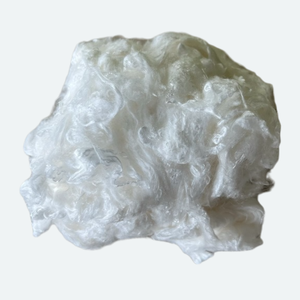
Applications of High Strength Composite GFRP Rebar Fiberglass Rebar Glass Fiber Reinforced Rebar
Applications of High-Strength Compound GFRP Rebar
Why Choose Fiberglass Rebar?
Glass Fiber Reinforced Polymer (GFRP) rebar offers a wise choice to typical steel support. It does not corrosion. It resists chemicals. It works well in harsh settings where steel would certainly fall short.
Usage in Marine and Coastal Projects
Coastal structures face constant exposure to deep sea. Salt causes steel to wear away quickly. GFRP rebar remains solid in these conditions. Building contractors use it in piers, seawalls, and offshore platforms. Its long life cuts maintenance prices and extends structure life.
Framework in Cold Climates
In places with heavy snow, roadways and bridges obtain treated with de-icing salts. These salts eat away at steel rebar. Fiberglass rebar handles this without damage. It is suitable for bridge decks, parking lot, and highway obstacles in north areas.
Electromagnetic-Sensitive Sites
Some centers require products that do not conflict with signals. Hospitals, research study labs, and airport terminals fall under this group. Steel obstructs or misshapes electro-magnetic waves. GFRP rebar is non-conductive. It maintains signals clear and devices functioning right.
Light-weight Building Demands
GFRP rebar weighs about one-fourth as high as steel. This makes transport simpler. It likewise quickens installment. Employees handle it without heavy lifting gear. Projects finish quicker with fewer delays.
Destructive Industrial Setups
Manufacturing facilities, wastewater plants, and chemical storage space areas launch fumes and fluids that assault metal. Glass fiber reinforced rebar takes on acids, antacid, and various other hostile compounds. Structures remain secure and intact for years.
Building contractors pick GFRP rebar when longevity, safety, and reduced upkeep matter most. Its performance in difficult conditions makes it a trusted solution throughout several industries.
Company Profile
We are the global leader in lightweight concrete and advanced engineered foam solutions. Known globally for its commitment to research, innovation, and applied expertise, we have been providing engineered foam solutions since the early 2012’s.
We can supply high-quality concrete admixture and foam concrete related products all over the world.
The company has a professional technical department and quality supervision department, a well-equipped laboratory, and equipped with advanced testing equipment and after-sales customer service center.
If you are interested, please feel free and contact us.
Payment
T/T, Western Union, Paypal, Credit Card etc.
Shipment
By air, by sea, by express, as customers request.
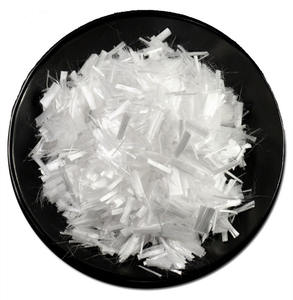
5 FAQs of High Strength Composite GFRP Rebar Fiberglass Rebar Glass Fiber Reinforced Rebar
Frequently Asked Questions About High-Strength GFRP Rebar
What is GFRP rebar made of?
GFRP rebar is made from glass fibers and a polymer resin. The glass fibers give it strength. The resin holds everything together and protects the fibers. This mix creates a material that is strong but does not rust.
Why choose GFRP over steel rebar?
GFRP rebar does not corrode. Steel can rust when exposed to water or salt. Rust weakens steel over time. GFRP stays strong in wet or salty conditions. It also weighs less than steel, making it easier to carry and install.
Is GFRP rebar strong enough for construction?
Yes. GFRP rebar has high tensile strength—often higher than steel on a pound-for-pound basis. It works well in concrete structures like bridges, roads, and marine projects. Engineers design with its specific properties in mind to ensure safety and performance.
Can GFRP rebar be used with regular concrete?
Yes. GFRP rebar bonds well with standard concrete. You place it the same way you would place steel rebar. Just follow project specifications and building codes. Proper spacing and cover depth are important for long-term results.
Does GFRP rebar conduct electricity?
No. GFRP rebar is non-conductive. It does not carry electric current. This makes it safe for use near power lines or in sensitive electronic environments. It also means it will not interfere with radio signals or cause stray currents that damage other materials.
REQUEST A QUOTE
RELATED PRODUCTS
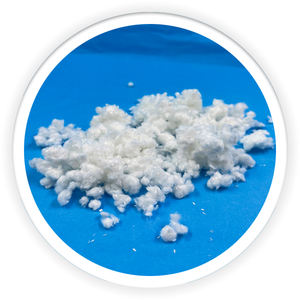
Micro Steel Fiber Concrete Reinforced Metal Steel Fibers For Ready Mixed UHPC Concrete Building Materials
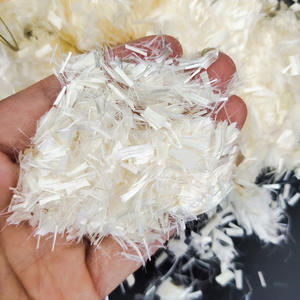
Reinforced Concrete Macro Concrete Fiber Machine and Fibrillated Polypropylene Concrete Fiber Production Line

Factory High Strength 12mm Length PP Concrete Fiber Polypropylene Fiber Using for Concrete Reinforced

Fiber Pallet GMT Brick Factory Different Size Thicknesses High Strength Glass Fiber Pallets for Concrete Block Machine

PP Short Concrete Fiber 3 to 5mm Used for High Performance Concrete to Provide Crack Resistance