


Lightweight Concrete Additives | High-Performance Foaming Agents for Cellular Concrete

PRODUCT PARAMETERS
Description
Overview of Fiberglass Geogrid s for Reinforcement Civil Engineering Fiber Knitted Geogrid
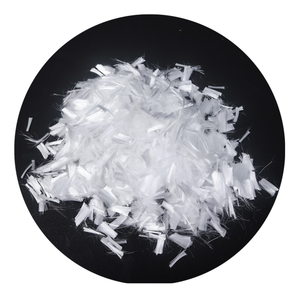
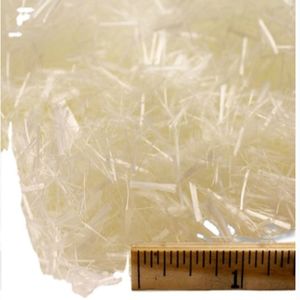
For high-impact resistance, we offer Steel Fibers, an ideal replacement for welded wire mesh in industrial floors and pre-cast elements. We also provide specialized Structural Synthetic Fibers that offer high tensile strength for demanding applications. These fibers are uniformly dispersed throughout the concrete mix, creating a multi-dimensional reinforcement network that traditional methods cannot achieve. This integrated approach simplifies construction, accelerates placement, and enhances the overall integrity and longevity of the concrete, providing a modern answer to age-old cracking and durability challenges.
Features of Fiberglass Geogrid s for Reinforcement Civil Engineering Fiber Knitted Geogrid
1. Superior Crack Control and Enhanced Durability:
The primary feature of our fibers is their ability to bridge both micro-cracks that form during the plastic state and larger cracks in hardened concrete. This three-dimensional dispersion creates a more cohesive matrix that resists crack propagation. The direct benefit is a significant reduction in both plastic shrinkage cracking and long-term crack width. This leads to a much more durable concrete with lower permeability, which in turn enhances resistance to water ingress, freeze-thaw damage, and corrosion of any embedded steel. The result is a structure with a longer service life and reduced maintenance costs.
2. Increased Impact and Abrasion Resistance:
Fibers, particularly steel and robust synthetic macro fibers, dramatically improve the concrete’s toughness and post-crack performance. They absorb and distribute energy upon impact or loading. This feature provides the benefit of a more resilient surface that is less prone to spalling, chipping, and abrasion under heavy traffic or mechanical wear. This is a critical advantage for industrial floors, warehouse pavements, and infrastructure projects, leading to a harder-wearing surface that maintains its integrity over time.
3. Construction Efficiency and Cost Savings:
A key feature of using fiber reinforcement is the elimination of welded wire mesh (WWF) in many applications. This provides immense on-site benefits: it simplifies placement, as there is no mesh to be set up or potentially displaced, and it accelerates the entire construction process. By removing a labor-intensive step, projects see reduced labor costs and faster project timelines. The uniform distribution of fibers also ensures consistent reinforcement throughout the entire concrete section, unlike mesh, which can be improperly placed, leading to more reliable and predictable performance.

Specification of Fiberglass Geogrid s for Reinforcement Civil Engineering Fiber Knitted Geogrid
Fiberglass Geogrid for Civil Engineering Reinforcement
Strong and Reputable Product
Fiberglass geogrids are made from high-strength fiberglass yarns. These yarns are woven right into a steady grid framework. The grid is then covered with a protective polymer. This layer assists the geogrid withstand damage from moisture, chemicals, and lasting stress and anxiety. The result is a sturdy product built to last in hard ground conditions.
Exactly how It Functions
When put in soil or asphalt layers, the geogrid locks bits together. This creates a more powerful, extra secure base. It spreads out loads uniformly throughout a bigger location. That minimizes rutting, breaking, and moving over time. Designers use it under roadways, parking lots, railways, and embankments to improve performance and expand life span.
Trick Includes
High tensile strength: Takes care of heavy loads without stretching or damaging.
Low elongation: Remains dimensionally stable under stress.
Corrosion immune: Will certainly not rust or weaken like steel products.
Lightweight: Easy to carry and mount on site.
Cost-efficient: Cuts long-lasting maintenance and repair costs.
Technical Facts
Typical tensile stamina ranges from 50 kN/m to 200 kN/m, relying on the quality. Aperture sizes are made to enable great dirt interlock. The polymer finish makes sure compatibility with typical construction materials like asphalt and concrete. Rolls been available in basic widths of 1 to 6 meters and sizes up to 100 meters for quick deployment.
Setup Tips
Lay the geogrid level on a ready surface. Overlap edges as guided by the task designer. Safeguard with pins or staples if required. Cover immediately with accepted fill product. Prevent sharp objects that could tear the grid throughout positioning. Correct installment guarantees complete efficiency advantages.
Applications of Fiberglass Geogrid s for Reinforcement Civil Engineering Fiber Knitted Geogrid
Applications of Fiberglass Geogrids in Civil Engineering
Strong Assistance for Roads and Pavements
Fiberglass geogrids are commonly used to strengthen roadways and sidewalks. They aid stop cracks from spreading through asphalt layers. When put between pavement layers, these geogrids wait with each other. This makes the road last much longer and decreases the demand for fixings.
Steady Structures for Railways
Train tracks need solid ground underneath. Fiberglass geogrids add toughness to the soil below the tracks. They spread out heavy train tons over a larger location. This maintains the track degree and secure for day-to-day usage.
Much Better Performance in Retaining Walls
Keeping walls keep back soil on inclines or hills. Including fiberglass geogrids behind the wall surface gives added assistance. The geogrids lock right into the soil and act like inner anchors. This prevents the wall from leaning or breaking down gradually.
Efficient Incline Defense
On high inclines, soil can conveniently move or wash away. Fiberglass geogrids maintain the surface area by holding soil particles in place. They function well with plant life or concrete coverings to secure versus disintegration. This is especially useful near freeways or shores.
Lightweight Yet Sturdy Solution
These geogrids are made from woven fiberglass coated with protective products. They stand up to damage from chemicals, dampness, and temperature level adjustments. Despite the fact that they are light, they lug high tensile strength. Installation is quick and does not need hefty tools.
Inexpensive for Large Projects
Making use of fiberglass geogrids cuts long-term expenses. They minimize the amount of fill product needed. Maintenance costs go down due to the fact that structures remain stable much longer. Lots of engineers select them for big framework work like flight terminals, ports, and freeways.
Company Profile
We are the global leader in lightweight concrete and advanced engineered foam solutions. Known globally for its commitment to research, innovation, and applied expertise, we have been providing engineered foam solutions since the early 2012’s.
We can supply high-quality concrete admixture and foam concrete related products all over the world.
The company has a professional technical department and quality supervision department, a well-equipped laboratory, and equipped with advanced testing equipment and after-sales customer service center.
If you are interested, please feel free and contact us.
Payment
T/T, Western Union, Paypal, Credit Card etc.
Shipment
By air, by sea, by express, as customers request.
5 FAQs of Fiberglass Geogrid s for Reinforcement Civil Engineering Fiber Knitted Geogrid
Frequently Asked Questions About Fiberglass Geogrid for Civil Engineering
What is fiberglass geogrid used for?
Fiberglass geogrid strengthens soil and pavement structures. It is commonly used in road construction, retaining walls, slopes, and foundations. The grid holds materials together and spreads loads evenly. This helps prevent cracks and extends the life of the structure.
Why choose fiberglass over other geogrid materials?
Fiberglass geogrid has high tensile strength and resists stretching. It does not rot, corrode, or break down in harsh weather. It also handles heavy loads better than plastic or polyester grids. These features make it ideal for long-term civil engineering projects.
How is fiberglass geogrid installed?
The ground must be leveled and compacted first. Then, unroll the geogrid over the surface without wrinkles. Overlap edges as needed and secure with pins or staples. After that, place soil, aggregate, or asphalt on top and compact it firmly. Proper installation ensures full performance.
Can it work in wet or acidic environments?
Yes. Fiberglass geogrid is coated with a protective polymer that resists water, chemicals, and UV rays. It stays strong even in wet ground or acidic soil. This makes it reliable in many different site conditions.
Does it help reduce project costs?
It often lowers overall costs. By reinforcing weak soils, it reduces the need for expensive fill material. It also cuts maintenance expenses because roads and structures last longer. Faster construction times add further savings.
REQUEST A QUOTE
RELATED PRODUCTS
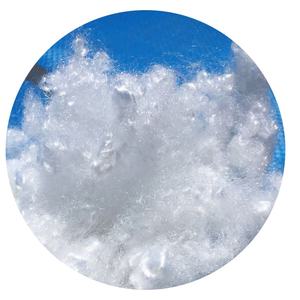
Chopped Acrylic Fiber Concrete Polyacrylonitrile Fiber For Cement Board

High Quality Eco Friendly White PP Concrete Fiber for Concrete Construction

reinforced Synthetic polypropylene macro fiber PP macro fiber concrete fiber for precast concrete
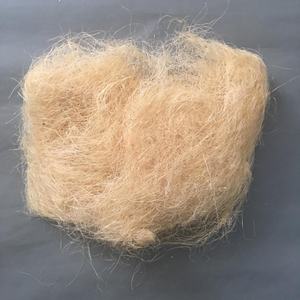
PP Polypropylene Monofilament Concrete Fiber Polypropylene Synthetic Staple Fiber for Concrete Cement

Customized Industrial Macro Concrete Fiber Steel Concrete Cracking Toughness with Customized Application
