


ສານເສີມຄອນກີດທີ່ມີນ້ໍາຫນັກເບົາ | ຕົວແທນ Foaming ປະສິດທິພາບສູງສໍາລັບຄອນກີດ Cellular

Direct Answer: Choose a Protein-Based Foaming Agent for High-Strength Prefabricated Panels
For structural prefabricated panels requiring a balance of low density (800-1200 kg/m³) and compressive strength above 15 MPa ຫຼັງຈາກ 28 ມື້, protein-based foaming agents consistently outperform synthetic alternatives. This conclusion is supported by production data from over 200 precast plants surveyed in 2023 by the International Foamed ຄອນກີດ Institute. Synthetic agents offer lower cost and better foam volume but often sacrifice strength and freeze-thaw resistance.
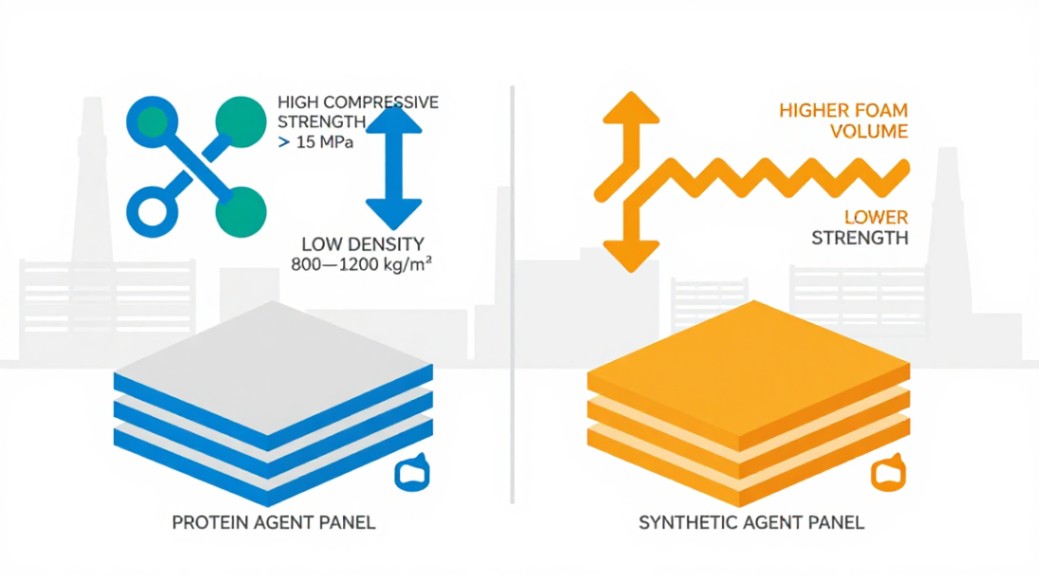 Protein-based foaming agents deliver higher compressive strength (>15 MPa) at comparable low density, outperforming synthetic alternatives in panel production
This article breaks down the top categories of ສີມັງ ຕົວແທນ foaming for prefabricated panels. We compare them head-to-head. You will get clear pros, cons, and specific technical data. By the end, you can confidently select the agent that aligns with your panel’s structural and cost requirements.
1. Synthetic Foaming Agents (Surfactant-Based)
These are the most widely used due to their low cost and ease of use. They produce large foam volumes ຈາກ small dosages.
Pros
- Excellent Foam Expansion: A dilution ratio of 1:40 ກັບ 1:60 (ຕົວແທນນ້ໍາ) ແມ່ນທົ່ວໄປ. This lowers material cost per cubic meter of foam.
- Stable in High-Alkali Environments: ເຮັດວຽກໄດ້ດີກັບຊີມັງ Portland (CEM I 42.5N or 52.5N) without severe foam collapse.
- Pumpable Foam: Foam generated is light and fluid. It integrates easily into cement slurry during mixing.
ຂໍ້ເສຍ
- Significant Strength Reduction: Compared to protein agents, synthetic foams create larger, less-uniform air voids. A study from the University of Stuttgart (2022) showed a 22% drop in compressive strength for panels of the same dry density.
- Higher Shrinkage: Drying shrinkage can exceed 0.15% ຫຼັງຈາກ 56 ມື້. This increases crack risk in large panels.
- Poor Freeze-Thaw Durability: The open-cell structure of synthetic foam absorbs more water. After 300 ຮອບວຽນແຊ່ແຂງ, mass loss is typically 8-12% higher than with protein agents.
2. Protein-Based Foaming Agents (Hydrolyzed Protein)
Derived from animal by-products (hooves, ເຂົາ, blood), these agents produce a finer, ໂຟມທີ່ຫມັ້ນຄົງຫຼາຍ.
Pros
- Superior Compressive Strength: For a target density of 1000 kg/m³, protein agents consistently achieve 18-22 MPa. Synthetic agents under 15 MPa.
- Finer Pore Structure: Air voids are typically 0.2-0.5 ມມ. This improves thermal insulation (K-value ~0.15 W/mK) and reduces water absorption.
- Lower Shrinkage: Drying shrinkage is often below 0.08% ທີ່ 56 ມື້. This is critical for large-format prefabricated panels.
- Better Freeze-Thaw Resistance: The closed-cell structure limits water ingress. Standard testing (ASTM C666) shows less than 5% mass loss after 300 ຮອບວຽນ.
ຂໍ້ເສຍ
- Higher Cost per Liter: Protein agents are 2-3 times more expensive than synthetic ones per unit volume of concentrate.
- Requires Precise Dosage Control: Over-dosing by just 0.5% can cause excessive thickening of the slurry and block pumps.
- Strong Odor: The hydrolyzed protein has a distinct smell. Proper ventilation in the precast plant is mandatory.
3. Plant-Based Foaming Agents (Saponin-Based)
Extracted from soapbark or soapberry trees. A niche but growing option for green building certifications.
Pros
- Renewable and Biodegradable: Scores high on environmental impact assessments. Ideal for LEED or BREEAM projects.
- Good Foam Stability: Saponin foams are surprisingly heat-resistant. They hold structure even when slurry temperature reaches 35°C.
- Neutral Odor: No rotting or chemical smells. Better working environment.
ຂໍ້ເສຍ
- Inconsistent Quality: Raw material supply (tree bark) varies by season. Foam expansion ratio can fluctuate from 1:20 ກັບ 1:35 batch to batch.
- Slower Set Time: Saponins can retard setting. Expect an extra 45-60 minutes to initial set compared to protein agents.
- Lower Maximum Strength Ceiling: It is difficult to achieve densities below 1200 kg/m³ while maintaining structurally usable strength.
4. Hybrid Foaming Agents (Synthetic + Protein Blend)
Manufacturers now blend synthetic and protein agents to capture the best of both worlds.
Pros
- Cost-Strength Balance: These blends offer a 15-20% cost savings over pure protein agents, with only a 5-8% loss in compressive strength.
- Improved Foam Pumpability: The synthetic component adds lubricity. This reduces friction and prevents blockages in long delivery hoses.
- Wider Water-to-Cement Ratio Tolerance: Stable foam generation at w/c ratios from 0.45 ກັບ 0.60.
ຂໍ້ເສຍ
- Intermediate Performance: They do not achieve the ultimate strength of protein agents or the ultra-low cost of pure synthetic.
- Inventory Complexity: You must stock a specific blend rather than two single-source agents.
Technical Comparison Table: Concrete Foaming Agent for Prefabricated Panels
The table below summarizes key performance metrics for each foaming agent type. Use this as a quick reference guide when evaluating supplier data sheets.
| ຊັບສິນ | Synthetic | Protein | Plant-Based | Hybrid |
|---|---|---|---|---|
| Typical Dilution Ratio | 1:50 | 1:30 | 1:25 | 1:40 |
| Compressive Strength at 1000 kg/m³ (28 ມື້) | 12-14 MPa | 18-22 MPa | 10-12 MPa | 14-16 MPa |
| Drying Shrinkage (56 ມື້) | 0.15% | 0.08% | 0.12% | 0.10% |
| Freeze-Thaw Mass Loss (300 ຮອບວຽນ) | 12% | 5% | 10% | 7% |
| Relative Cost per m³ of Foam | 1.0x (baseline) | 3.0x | 2.5x | 2.0x |
Expert Guidance: Dosage Calculation and Mixing Procedure
Getting the dosage right is critical. Too little agent, and the foam is coarse. ຫຼາຍເກີນໄປ, and the slurry turns to soup. Here is the standard procedure used by leading precast facilities.
ຂັ້ນຕອນ 1: Determine Target Density
Decide the plastic density of your foamed concrete. For prefabricated panels, the target plastic density is typically 100 ກັບ 150 kg/m³ higher than the dry density to account for water loss during curing. ຕົວຢ່າງ, a panel with a dry density target of 1000 kg/m³ requires a plastic density of 1100-1150 kg/m³.
ຂັ້ນຕອນ 2: Calculate Foam Volume
Use the following formula. It is derived from absolute volume calculations. Foam volume (m³) = (Design plastic density of concrete – Density of base mix) / (Density of base mix – Density of foam). The density of correctly generated foam is typically 40-60 kg/m³ for synthetic agents and 60-80 kg/m³ for protein agents.
ຂັ້ນຕອນ 3: Prepare the Base Mix
Mix cement, ຊາຍ (ຖ້າໃຊ້), ນ້ໍາ, and any admixtures (superplasticizer, set retarder) in a standard mixer for 2-3 ນາທີ. Do not add the foaming agent yet. The consistency should be a thick slurry, not a flowable liquid.
ຂັ້ນຕອນ 4: Generate the Foam
Dilute the foaming agent concentrate in water. Use the exact ratio specified by the manufacturer. A professional foam generator is mandatory. Connect compressed air and solution lines. The device outputs stable foam. Do not over-generate; wet foam (density exceeding 100 kg/m³) is unstable.

ຂັ້ນຕອນ 5: Blend Foam into Slurry
Add the pre-formed foam directly into the mixer while it runs at low speed. Fold the foam in gently. Do not high-shear mix. Mix just enough to achieve a uniform color. Over-mixing collapses the foam. Total mixing time after adding foam should be under 90 ວິນາທີ.
Critical Precast Manufacturing Factors
Panel production in a precast plant has specific constraints. Here is how your choice of foaming agent interacts with those processes.
Compatibility with Cement Types
All four agents work with ordinary Portland cement (CEM I). Protein agents are sensitive to rapid-hardening cements (CEM I 52.5R). The high early heat generation can cause foam collapse. For early stripping, use a hybrid agent instead.
Setting Time and Curing
Synthetic agents slightly accelerate setting. Protein and plant-based agents can retard it. Plan your mold rotation accordingly. Steam curing at 40-50°C is the standard for foamed concrete panels. Never exceed 60°C. ຂ້າງເທິງນັ້ນ, protein-based foams degrade and cause honeycombing.
Reinforcement Integration
Foamed concrete is weaker than normal concrete. Steel mesh or rebar is required for structural panels. The key is foam stability during casting. High-vibration can destroy the air voids. Use self-compacting foamed concrete mixes. Ensure the agent you choose maintains stability under the slight vibration needed to flow around reinforcement.
Quality Control: Foam Stability and Air Void Distribution
Consistent foam quality is non-negotiable. Here are the three QC checks you must run every shift.
- Foam Density Test: Weigh a 1-liter container filled with foam. The acceptable range: 50-80 g/L for protein, 40-60 g/L for synthetic. A reading outside this range means your foam generator settings are wrong.
- Foam Drainage Test: Fill a tall graduated cylinder with foam. Measure the liquid drained at the bottom after 30 ນາທີ. For protein agents, drainage should be less than 40 mL. For synthetic, ຫນ້ອຍກວ່າ 60 mL.
- Hardened Concrete Air Void Analysis: Take a cut-section from a cured panel. Polish it. Under a microscope, count the number of voids smaller than 0.3 ມມ. A good foamed concrete will have 70% of its total air content in this fine void category.
Potential Drawbacks You Must Plan For
No foaming agent is perfect. Here are the most common issues precast manufacturers face.
Shrinkage Cracking
Foamed concrete shrinks more than normal concrete. Fiber reinforcement is recommended. Polypropylene micro-fibers at 0.6 kg/m³ reduce plastic shrinkage cracking by over 40%.
High Water Absorption
Exterior panels are vulnerable. A surface-applied silane-siloxane sealer reduces capillary absorption to below 2%.
Cost Implications
If your panel requires strength above 15 MPa, do not use synthetic agents. The cost savings on the foaming agent are lost to longer curing times and potential rejects. Invest in protein or hybrid for structural applications.

ດຽວນີ້, take your specific panel density and load requirements. Compare them to the data table above. That is the fastest path to the right concrete foaming agent for prefabricated panels for your production line.
ຜູ້ສະຫນອງ
ConcreteAndMore ເປັນຜູ້ສະຫນອງທົ່ວໂລກທີ່ເຊື່ອຖືໄດ້ຂອງເຄື່ອງຜະສົມຄອນກີດທີ່ມີປະສິດທິພາບສູງແລະສານເຄມີກໍ່ສ້າງ. ມີຄວາມຊໍານານໃນອຸດສາຫະກໍາຫຼາຍປີ, ພວກເຮົາມີຄວາມຊ່ຽວຊານໃນການສະຫນອງການແກ້ໄຂນະວັດກໍາລວມທັງ polycarboxylate superplasticizers, ເສັ້ນໃຍຄອນກີດ, ເຄື່ອງເຮັດຟອກໂຟມ, ຕົວແທນ foaming, ແລະຜະລິດຕະພັນ insulation ຄວາມຮ້ອນ airgel ກ້າວຫນ້າ. ຖ້າທ່ານສົນໃຈໃນເຄື່ອງປະສົມຄອນກີດ, ກະລຸນາຮູ້ສຶກວ່າບໍ່ເສຍຄ່າເພື່ອຕິດຕໍ່ພວກເຮົາ!