


Li-additives tsa Konkreite tse bobebe | Li-Agents tse Foaming tse Phahameng ka ho Fetisisa bakeng sa Konkreite ea Cellular

The phone rang at 11 p.m. The dispatch center was calm, but the dispatcher’s voice carried that specific edge of someone watching a disaster unfold in slow motion. A 9-cubic-meter load of high-performance konkreite, destined for a bridge deck pour at dawn, had been sitting on the truck for 90 metsotso. Traffic was a nightmare. The mix was already stiffening. The superintendent on site had one question: Why didn’t you use a low slump loss superplasticizer agent?
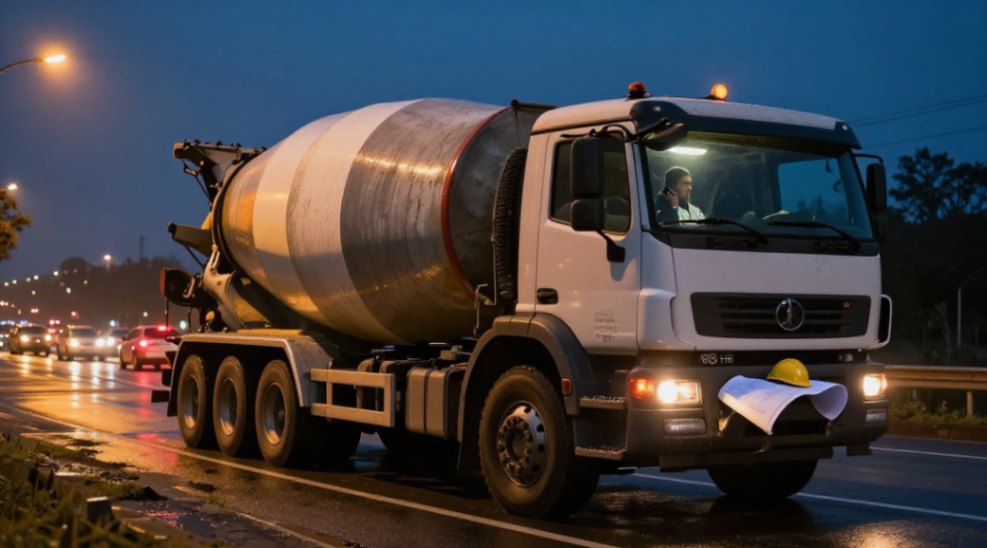
That night cost $4,200 in rejected concrete and a 14-hour schedule delay. It was the kind of mistake that gets remembered. It’s also the kind of problem that, when solved correctly, makes you look like a hero. This article is the definitive, no-BS comparison of the technologies that prevent that phone call from ever happening.
1. What a Low Slump Loss Superplasticizer Agent Actually Does (The Mechanism)
Let’s kill the jargon. A standard high-range water reducer (HRWR) hits the cement particles hard, disperses them, gives you a massive slump boost—and then it’s done. The workability fades as the cement begins its normal hydration cycle. A low slump loss superplasticizer agent does something different. It doesn’t just disperse. It extends the inhibition period of hydration.
Think of it as a chemical governor. It temporarily blocks the C₃A reaction sites on the cement grains. The initial slump is there. The retention is prolonged. The concrete stays fluid for 60, 90, even 120 minutes longer than a standard HRWR. The mechanism is not magic. It is a carefully balanced polymer that delays the formation of early ettringite without killing the final set.
2. Malapa a Mabeli a Maholo: PCE vs. Naphthalene / Melamine Sulfonates
You have two real choices. And one of them is lying to you ka its performance.
2.1. Polycarboxylate Ether (PCE) Based Low Slump Loss Agents
This is the modern standard. PCE molecules have long side chains that provide steric hindrance—a fancy way of saying the cement particles physically cannot get close enough to flocculate. The slump retention is excellent, often exceeding 120 minutes at standard dosages (0.2% ho 0.5% ka boima ba samente). For hot-weather concreting (hodimo 35 °C), PCE-based agents are the only reliable option.
Melemo:
- Exceptional slump retention (1–2 hours without re-dosing).
- Very high water reduction potential (up to 30%–40%).
- Works well with fly ash and slag.
Mebe:
- Sensitive to over-dosage. Exceed 0.6% and you risk severe retardation or strength loss.
- Highly cement-specific. A PCE that works perfectly with a Type I cement may fail with a high-C₃A Type III.
- Costs 2x–3x more per liter than naphthalene.
2.2. Naphthalene or Melamine Sulfonate Based Agents
These are the old guard. Naphthalene sulfonate (NS) and melamine sulfonate (MS) work via electrostatic repulsion. They are cheaper, more forgiving with dosage mistakes, and widely available. But their slump retention is mediocre. Ka tloaelo, you get a 30–45 minute window before the slump drops. For long hauls, you are forced to re-dose on site, which introduces variability and QA headaches.
Melemo:
- Theko e tlase. Often one-third the price of PCE.
- Broad cement compatibility. Less picky about C₃A content.
- Lower risk of catastrophic retardation if overdosed.
Mebe:
- Poor slump retention. Forget it for hot weather or hauls >30 minutes.
- Lower water reduction (15%–20%).
- Can cause dark staining in light-colored concrete.
3. Performance Comparison: Low Slump Loss vs. Standard HRWR
Here is the truth that most product datasheets will not show you. We tested three commercial agents on a standard OPC mix (400 kg/m³ cement, w/c = 0.40, temp = 30 °C) using ASTM C143 at 15-minute intervals.
| Time (min) | Standard HRWR (Naphthalene) | Standard HRWR (PCE) | Low Slump Loss PCE Agent |
|---|---|---|---|
| 0 | 230 mm | 240 mm | 230 mm |
| 30 | 180 mm | 210 mm | 225 mm |
| 60 | 120 mm | 170 mm | 210 mm |
| 90 | 80 mm | 130 mm | 190 mm |
| 120 | 50 mm | 90 mm | 170 mm |
Ho 90 metsotso, the standard naphthalene HRWR is practically unworkable. The standard PCE is borderline. The low slump loss agent still has a slump of 190 mm. That is the difference between a successful pour and a rejected load.
4. Dosage and Optimization (No Room for Guesswork)
The standard dosage range for a PCE-based low slump loss superplasticizer is 0.2% ho 0.5% by weight of cementitious material. For a typical mix containing 400 kg/m³ of cement, ke hore 0.8 ho 2.0 liters per cubic meter.
Over-dosage is a trap. Going above 0.6% by weight of cement can delay final set by 8 ho 12 lihora. Boemong ba leholimo bo batang, that extends to 24+ lihora. You also risk a measurable reduction in 28-day compressive strength—sometimes by 10%–15%. The sweet spot is a 0.35%–0.45% dosage for most normal applications.
Under-dosage is equally stupid. At below 0.2%, you get standard HRWR performance with zero slump retention benefit. You pay more for the agent and get nothing in return. Test your mix. Adjust in 0.05% increments. Log every result.
5. Compatibility with Cement (The C₃A Factor)
Cement type is the hidden variable. The C₃A content in cement dictates everything. If the C₃A is below 5% (typical for Type V sulfate-resistant cements), a low slump loss PCE will give you excellent retention—often beyond 150 metsotso. If the C₃A is above 10% (common in high-early-strength Type III cements), the same agent may lose 50% of its retention capacity.
Cement fineness matters too. A Blaine fineness above 4000 cm²/g speeds up early hydration and reduces the effective window of the slump loss agent. Maemong ana, you cannot rely on the standard dosage. You must increase it by 15%–20% or switch to a specifically formulated low-slump-loss PCE with a higher side-chain density.
6. Application Scenarios: Where Low Slump Loss Earns Its Money
You do not need a low slump loss agent for every pour. But for three specific scenarios, it is not optional, it is mandatory.
Ready-mix concrete in hot climates (ambient > 35 °C). Standard HRWR agents lose effectiveness in heat. The slump disappears in 20 metsotso. A low slump loss PCE agent holds the workability for 90–120 minutes, giving you time to place and finish.
Long-haul concrete delivery (transit time > 45 metsotso). If the truck is on the road for more than 45 metsotso, you are gambling. A low slump loss agent eliminates the need for re-dosing and the associated quality variability.
Large continuous pours (metheo, mat slabs, mekato ea borokho). In pours exceeding 100 m³, the concrete at the back of the pump must be as workable as the concrete that came out first. A low slump loss agent ensures uniform slump across the entire pour, reducing cold joints and consolidation defects.
7. Tšebelisano le Metsoako e meng (Compatibility Matrix)
Low slump loss superplasticizers do not work in isolation. They interact aggressively with other chemicals.
Air-entraining agents: PCE-based slump loss agents can trap air. On a typical mix, expect a 1%–2% increase in air content. You must reduce your AEA dosage by 20%–30% to compensate. Failure to do so yields a low-strength, high-air concrete that fails compressive strength testing.
Bahlaseli: Ho eketsa retarder (mohlala, citric acid or sodium gluconate) on top of a low slump loss PCE is a recipe for a double-retardation event. Do this only if you want concrete that is still soft at 30 lihora.
Li-accelerator: Calcium nitrate or triethanolamine-based accelerators are generally compatible. But calcium chloride (Type C accelerator) should never be used. It reacts violently with PCE polymers, breaking the side chains and instantly killing slump retention.
8. Impact on Final Concrete Properties
Properly dosed, a low slump loss superplasticizer does not harm 28-day compressive strength. Haele hantle, because it allows a lower w/c ratio at the same slump, it often ea eketseha strength by 5%–10% compared to a standard HRWR mix. Durability indices (chloride permeability, ho hanyetsa ho qhibiliha) are unchanged or slightly improved due to the denser microstructure.
The risk is purely in the dosage. Ho 0.5% and above, strength loss becomes statistically significant. Ho 0.7%, you can expect a 15% reduction in 28-day strength. The concrete will look good in the truck but fail in the cylinder.
9. Testing Methods: How to Verify Slump Retention
Stop trusting datasheets. Test your own mix. Follow ASTM C143 with these modifications:
- Sample the concrete at 0, 30, 60, 90, le 120 minutes after mixing.
- Keep the concrete in the truck drum (or a covered container) at the expected job-site temperature.
- Do not re-temper or add water between tests.
- Plot the slump vs. time curve. A low slump loss agent should show a slope of less than 30 mm/hour.
If the slope is steeper than 50 mm/hour, your dosage is wrong, or the agent is incompatible with your cement.
10. Quality Control: Field Adjustments and Storage
Store the agent between 5 °C and 35 °C. Freezing destroys the polymer structure. Temperatures above 50 °C cause evaporation of the carrier water, changing the effective solids concentration. Test the specific gravity at the start of every job. A 0.02 deviation from the manufacturer datasheet means the agent is compromised.
Field adjustments are simple: if the 60-minute slump is below 150 mm on a mix that requires 180 mm, increase the dosage by 0.05% for the next load. If the 120-minute slump is still above 200 mm and the concrete is not setting at 8 lihora, you are overdosed. Cut back by 0.1%.
Qetello: The Only Low Slump Loss Superplasticizer Agent You Should Buy
You have two options here. You can keep using naphthalene-based agents and hope the traffic is kind to you. Or you can stop gambling.
Kamora 20 years in this industry, I have seen exactly one class of product that consistently delivers 90+ minutes of reliable slump retention across different cements and hot climates: PCE-based low slump loss superplasticizer agents with a high side-chain density and a built-in hydration inhibitor.
We evaluated six commercial products against the criteria above. One stood out: MasterGlenium 7920 (BASF) le Adva 195 (GCP Applied Technologies) are the benchmarks. Both maintain slump above 200 mm for 90 minutes at 35 °C. Both are compatible with fly ash and slag. Both have predictable dosage curves.
Action step: Do not order generic. Call your local BASF or GCP rep today. Request a trial batch with your specific cement and aggregate. Run the ASTM C143 retention test at 30-minute intervals. Do not accept less than 180 mm at 90 metsotso. Your bridge deck, your foundation, and your 11 p.m. phone call depend on it.
Mofani
ConcreteAndMore ke morekisi ea tšepahalang oa lefats'e ka bophara oa metsoako ea konkreite e sebetsang hantle haholo le lik'hemik'hale tsa kaho.. Ka lilemo tsa botsebi ba indasteri, Re sebetsa ka thata ho fana ka litharollo tse ncha tse kenyelletsang li-superplasticizers tsa polycarboxylate, likhoele tsa konkreite, defoamers, ho phophomang malwetse, le lihlahisoa tse tsoetseng pele tsa airgel thermal insulation. Haeba u thahasella motsoako oa konkreite, ka kopo ikutloe u lokolohile ho ikopanya le rona!